Blog Details

Northern Thailand moto tour

How to ride Mae Hong Son Loop

If there’s one route that makes Northern Thailand feel like it was designed by someone who really, really loves motorcycles, it’s the Mae Hong Son Loop.

The loop starts and ends in Chiang Mai and threads you through mountains, jungle, quiet towns, and an almost silly amount of corners. 

You’ll often see the loop described as “1,864 curves,” but I’d treat that number as more of a legend than a precise measurement. The Mae Hong Son Loop isn’t one single, locked-in route. There are several popular variations and plenty of worthy detours, so the distance and the number of corners change depending on which roads you choose. In this guide, I’ll show you the main loop styles so you can pick the version that fits your pace and your priorities.

This guide is written with bigger bikes in mind and for riders who already have a bit of seat time, the kind who enjoy a longer day in the saddle when the road is this good. 

If you’re coming on a scooter, the loop is still absolutely doable. You’ll just have a better experience by stretching it out with 1–2 extra days, or trimming a few detours so the ride stays relaxed and you’re not chasing the clock.

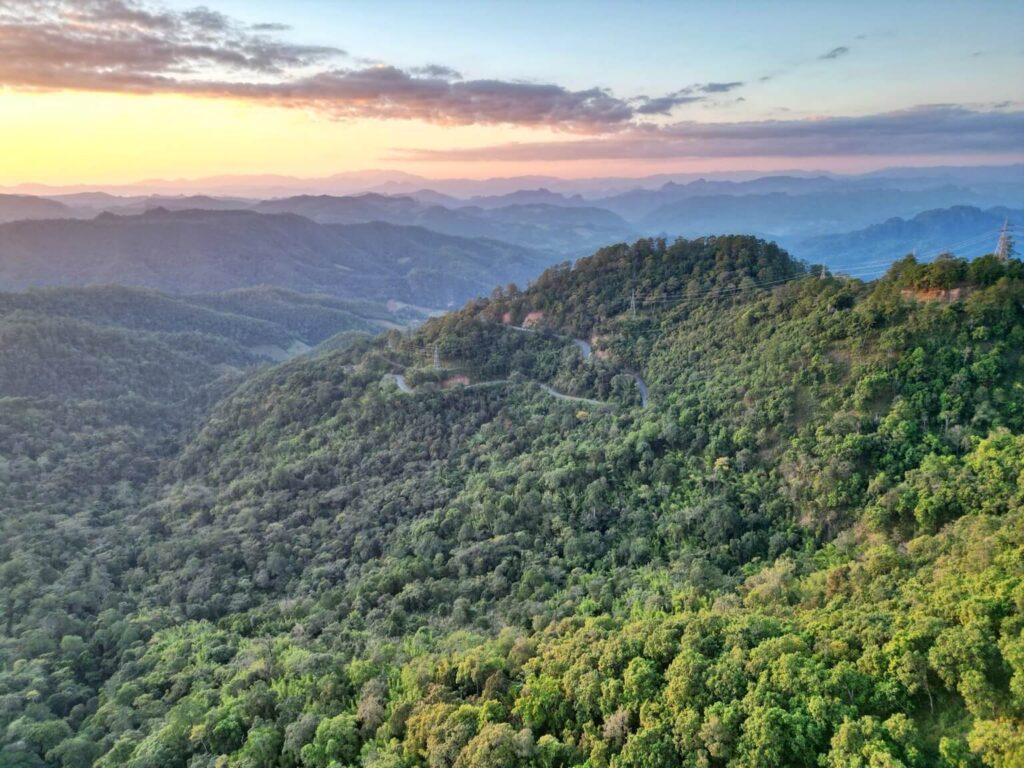
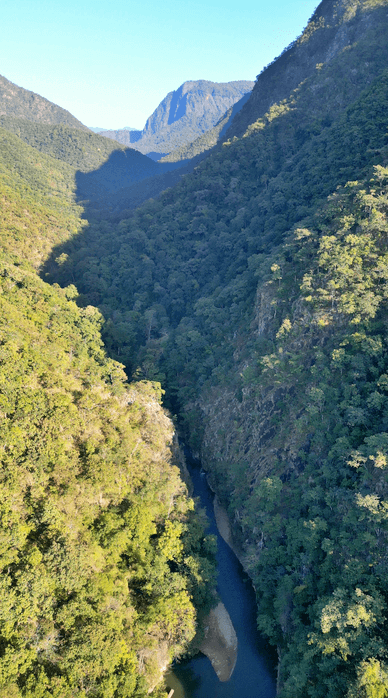
Mae Hong Son and Chiang Mai forests

Quick Facts

  • Start/Finish: Chiang Mai (loop)
  • Time needed:
    • 4 days if you follow one of my two tested rider itineraries
    • 5 days if you want breathing room
    • 6–10 days if you want hikes, hot springs, slow mornings and zero rushing
  • Distance: roughly ~700 km for the 4-day versions (detours change it)

Mini callout: “Riding day rule”
Start early; it gets dark around 18:00, and you want to arrive before dark.

Clockwise vs Counterclockwise

You will see a lot of confident opinions online about which direction is “best.” Some people often lean toward counterclockwise (usually because it puts Pai early in the trip), but you will also find plenty of riders saying it’s fine either way, or even preferring Chiang Mai to Pai in that direction. 

I’ve ridden the Mae Hong Son Loop multiple times in both directions, and honestly, I don’t feel a dramatic difference if your riding days are balanced. The loop twists around so much that you are not “missing” views just because you chose one direction over the other.

What matters much more than direction is timing, especially on the busy stretch between Chiang Mai and Pai. In my experience, it tends to feel calmer in the morning and noticeably busier later in the day. If you can, plan that section for an early start, whether you’re riding it at the beginning or the end of your loop.

If there’s one route that makes Northern Thailand feel like it was designed by someone who really, really loves motorcycles, it’s the Mae Hong Son Loop.

The loop starts and ends in Chiang Mai and threads you through mountains, jungle, quiet towns, and an almost silly amount of corners.

You’ll often see the loop described as “1,864 curves,” but I’d treat that number as more of a legend than a precise measurement. The Mae Hong Son Loop isn’t one single, locked-in route. There are several popular variations and plenty of worthy detours, so the distance and the number of corners change depending on which roads you choose. In this guide, I’ll show you the main loop styles so you can pick the version that fits your pace and your priorities.

This guide is written with bigger bikes in mind and for riders who already have a bit of seat time, the kind who enjoy a longer day in the saddle when the road is this good.

If you’re coming on a scooter, the loop is still absolutely doable. You’ll just have a better experience by stretching it out with 1–2 extra days, or trimming a few detours so the ride stays relaxed and you’re not chasing the clock.

And hey, I’ve done this loop multiple times, I know it pretty well 😉

Mae Hong Son and Chiang Mai forests

Quick Facts

  • Start/Finish: Chiang Mai (loop)
  • Time needed:
    • 4 days if you feel comfortable on riding a bike, and/or have a big bike
    • 5 days if you want breathing room
    • 6 and more days if you want hikes, hot springs, slow mornings and zero rushing
  • Distance: roughly ~600 km for the 4-day versions (detours change it)

Mini callout: “Riding day rule”
Start early; it gets dark around 18:00, and you want to arrive before dark.

Clockwise or Counterclockwise?

You’ll find a lot of strong opinions online about which direction is “best,” and you’ll notice many people lean counterclockwise – often because it brings you to Pai earlier in the trip. In reality, I’ve ridden the Mae Hong Son Loop multiple times in both directions, and if your riding days are reasonably balanced, the difference for most riders is smaller than the internet drama suggests. You’re not “missing” the scenery by choosing the “wrong” direction. The loop twists and turns so much that it delivers the magic either way.

What can matter more, especially for scooter riders, is the Chiang Mai ↔ Pai section. That road is steep in parts, and direction changes how it feels: riding Chiang Mai to Pai generally means more climbing, while riding Pai to Chiang Mai means more descending. On a bigger bike, that’s mostly a comfort and fatigue question. On a scooter, it can be more important because long descents demand smarter braking habits (using your brakes correctly, taking breaks, not overheating them), and some riders simply feel more confident going uphill than down.

So if you’re on a scooter and you want the “easier-feeling” setup, you might prefer counterclockwise, but I wouldn’t treat it as a strict rule. Timing still matters just as much: the Chiang Mai–Pai road tends to be calmer in the morning and busier later in the day, so an early start makes a bigger difference than direction.

In the itineraries below, I share my tips in the direction I usually ride, but you can absolutely flip them and use the same logic. If one direction fits your mood, your overnight plan, or your intuition better, follow that. The loop will still deliver.

Choose Your Loop Style (How This Guide Works)

The Mae Hong Son Loop isn’t one fixed route. It’s more like a toolkit: a set of incredible mountain roads that can be combined in different ways, depending on your pace, your bike, and what you actually want from the trip.

So instead of giving you one “do this or you’re doing it wrong” itinerary, this guide is built around the main riding sections of the loop. In a few places, there are two different roads you can take between the same points (one faster and more popular, one smaller and more scenic). In other places, you can add easy detours—waterfalls, caves, viewpoints, villages—that change the vibe of the day without changing the whole loop.

As you read, you can decide what fits you best:

  • Make a section your overnight destination,

  • Combine two sections into one longer riding day if you’re experienced and feeling strong,

  • Or stretch the loop by adding a night somewhere that deserves more than a quick photo stop.

My job here is to help you understand what each section feels like on the bike, how demanding it is, what the road is like, what’s worth stopping for, and what to expect along the way, so you can build your own version of the Mae Hong Son Loop with confidence.

Strech 1: Chiang Mai Doi Inthanon

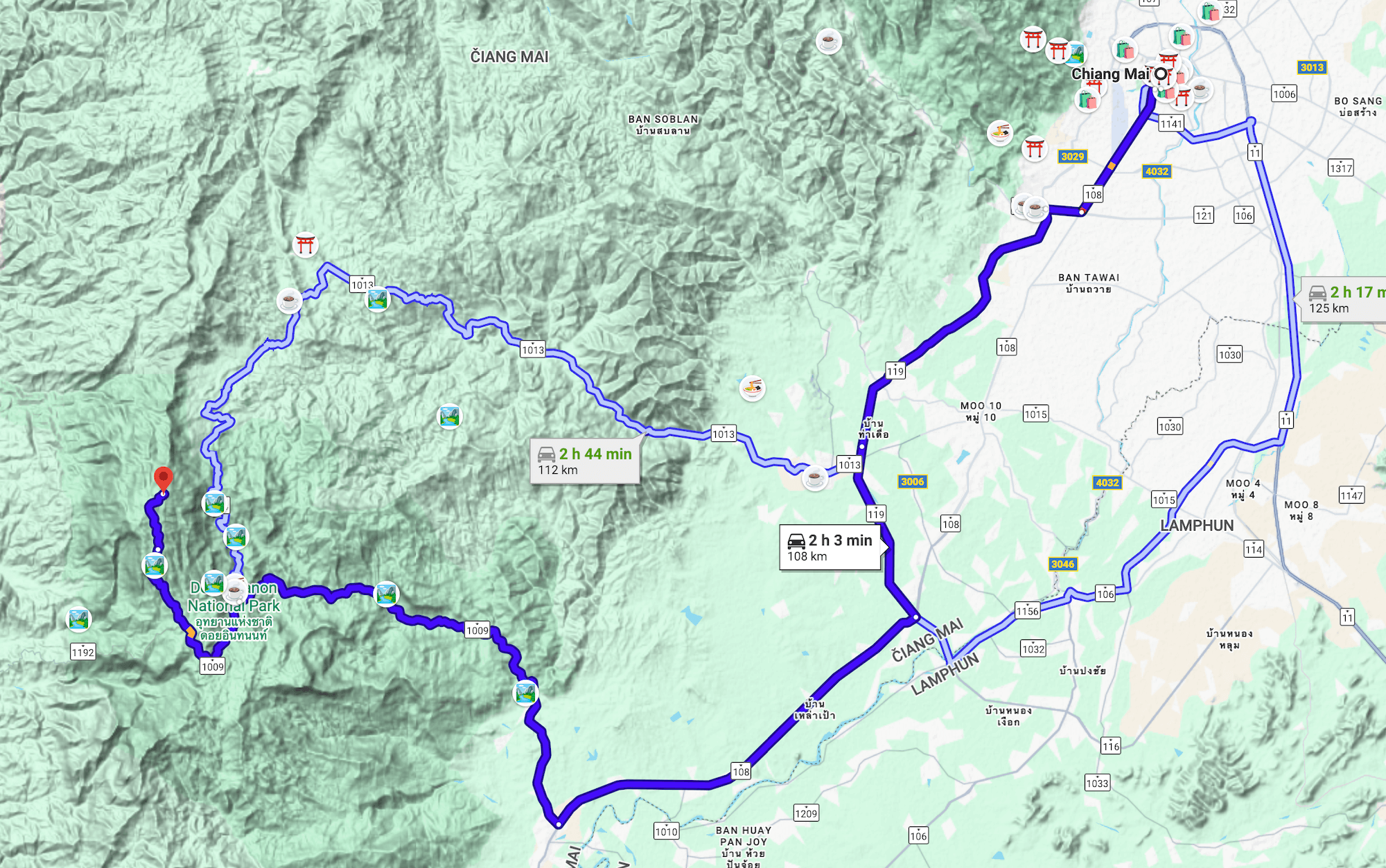
Approx: 120km / ~2-3h riding time

There are two very different approaches to reaching Doi Inthanon from Chiang Mai, and they completely change the feel of Day 1.

2 ways how to ride a motorcycle from Chiang Mai to Doi Inthanon

Option A: The southern approach, route 1088
This route tends to include more main-road riding and it’s also the direction many visitors use to access the park, so you’ll generally see more cars. The upside is that it’s convenient and it pairs naturally with the “waterfall corridor”. There are more easy-access waterfall stops on this side, so it’s a nice option if you want to mix riding with quick nature breaks.

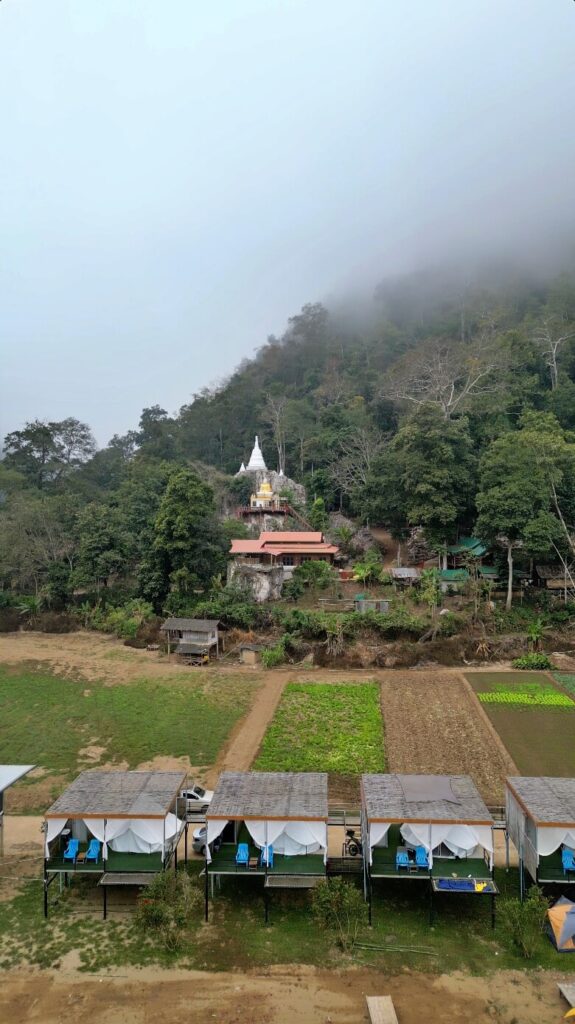
White Buddha Thailand

Option B: The northern approach (slower, smaller roads, more rider-focused)
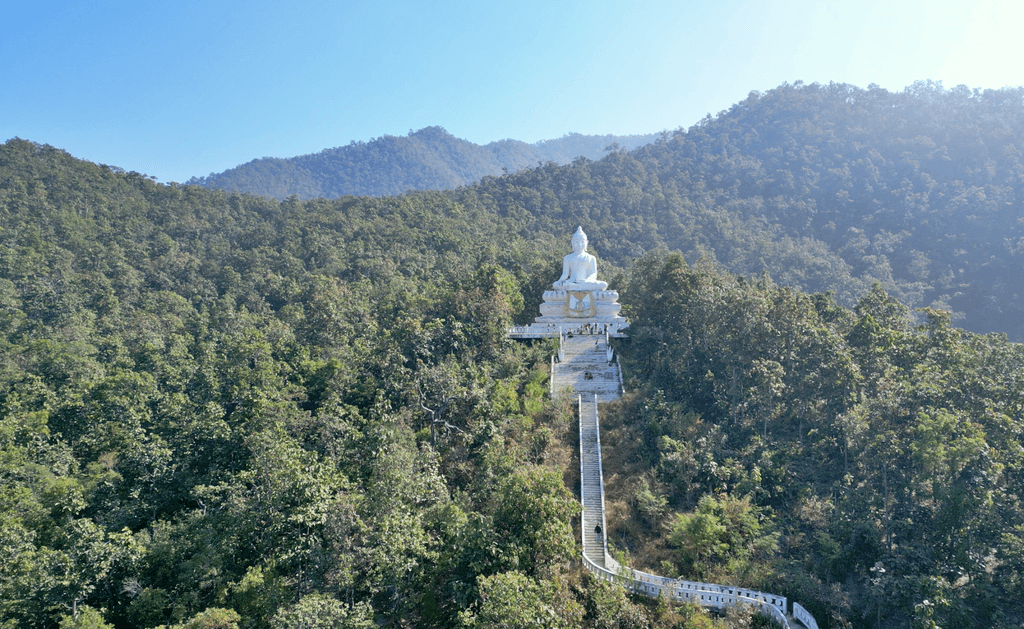
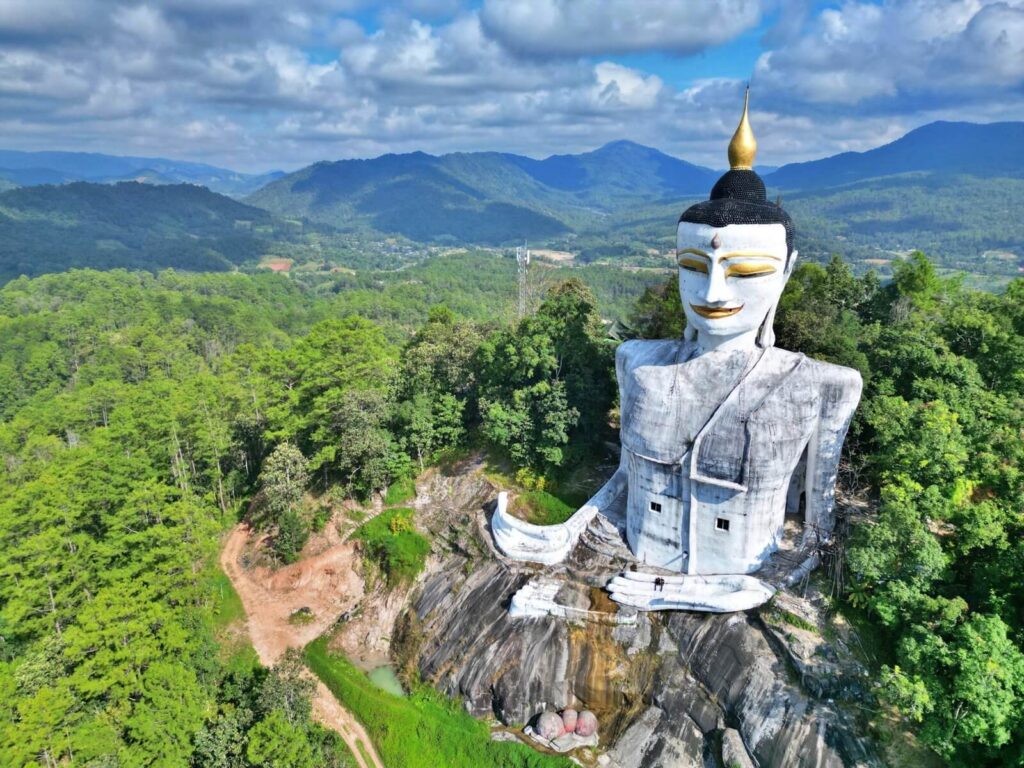
This one takes longer, but it’s also more rewarding from a riding perspective. The road is smaller, twistier, and a bit more technical, with a stronger feeling of riding through forest rather than “getting to the attraction.” Along the way you can stop at a less-visited temple area with a large seated white Buddha (not fully finished yet, so it stays quiet), and there are also parks where you can see Japanese cherry trees (sakura) when they bloom, typically around December to January.

My personal recommendation

Option 1. And if you want the best of both worlds, you can still “borrow” a piece of the southern side by doing a short out-and-back to catch one waterfall stop, without spending too much time on the more highway-like sections. Sleeping on the mountain makes this easy because you’re not racing daylight.

Local tip: the short hike (easy to fit in)

A popular trail option up here is a short hike that’s roughly 1 to 1.5 hours. If you plan to do the Kew Mae Pan trail, you’ll need a local guide (small fee od 200 THB), which is standard practice in the park.

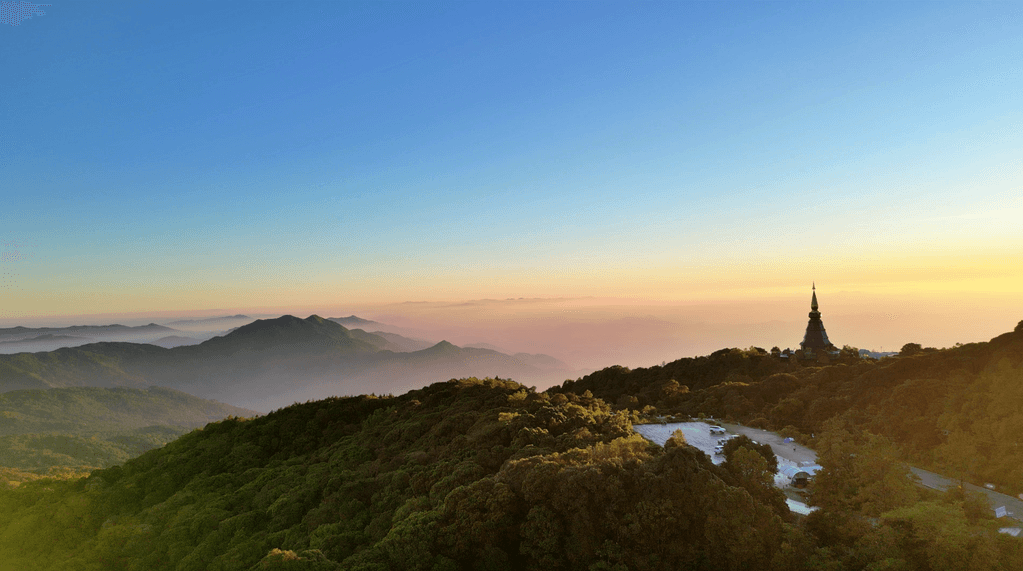
Doi Inthanon temples

Temperature reality

Even in Thailand, Doi Inthanon can feel properly chilly in high season. In December and January, it’s not unusual to see temperatures around 12°C in the afternoon, and nights can be colder because you’re at altitude on Thailand’s highest mountain. Pack a light jacket or hoodie and you’ll be comfortable — especially for early mornings and evenings.

What to see on the way:

Samnak Wipassana Phra That Sri Somdej (the big white Buddha)
If you like quiet, slightly off-the-main-tourist-line places, this is a great stop. The huge seated white Buddha is the kind of landmark that feels impressive in person, and because it’s not as famous as the main Inthanon highlights, it often feels calmer and less crowded.

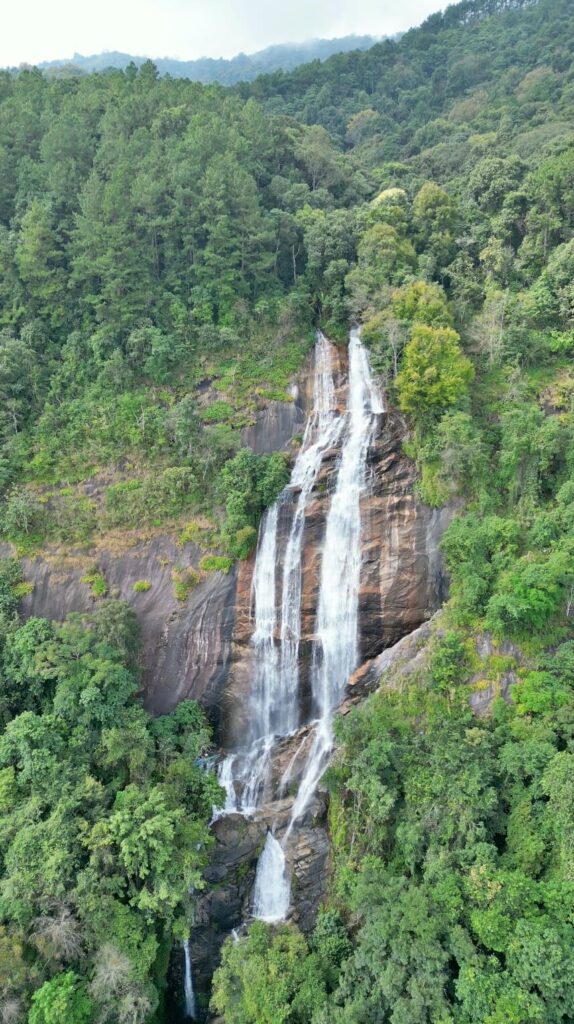
Siriphum Waterfall (the “don’t blink” waterfall)
This one is dramatic, but the catch is: you mostly see it from a distance rather than walking right up to it. It’s worth it, but you need to be alert and stop only where it’s safe — treat it like a viewpoint moment, not a “park anywhere” stop.

Siriphum waterfall Thailand

Doi Inthanon National Park (the classic highlights + a short walk)
Even if you’re not “a hiking person,” the park is worth it. The air changes, the scenery shifts, and a short walk here is a great way to reset your body after riding. If you plan to do the Kew Mae Pan trail, remember that a local guide is required (small fee) — standard practice in the park.

Sakura spots (seasonal, December–January)
Depending on the timing, you can stop at one of the small parks with Japanese cherry trees. When they bloom, the pink blossoms feel wildly out of place in Thailand — in the best way. It’s a quick, easy stroll and a very photogenic break.

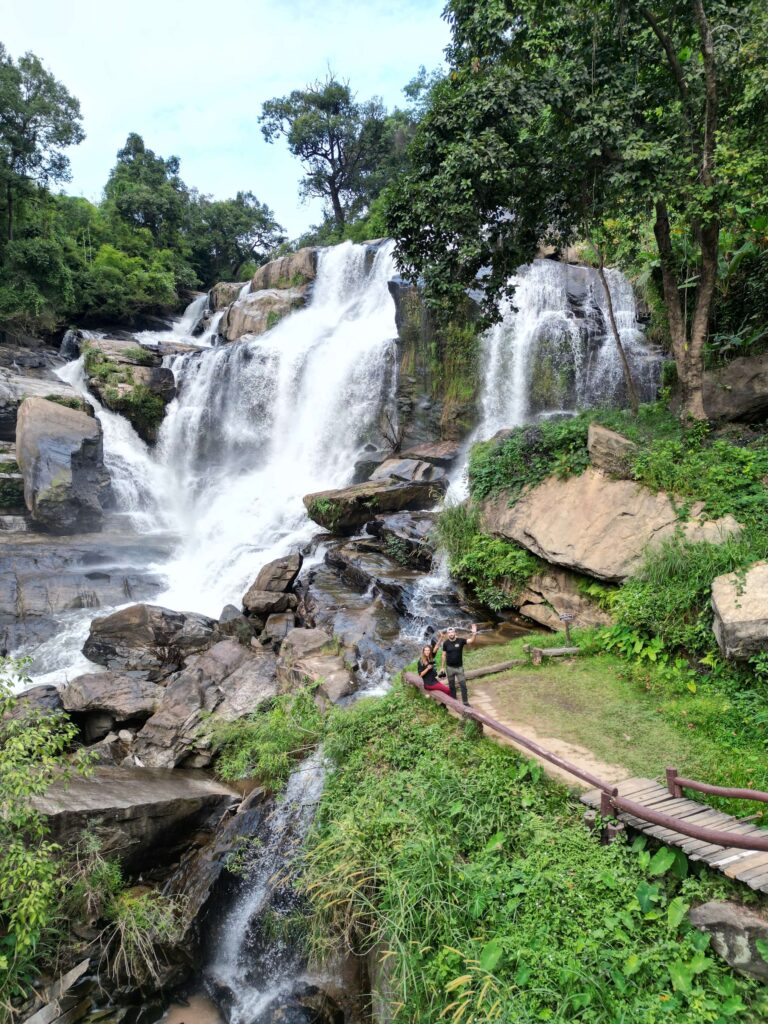
Wachirathan Waterfall (high reward, low effort)
If you’re taking the more popular southern approach, this is one of the best easy stops: park close, walk a short distance, and you get a proper powerful waterfall without losing much time.

Mae Klang Waterfall (optional, if your day has extra space)
Beautiful and worth it when the timing works, but it’s better treated as a bonus rather than a must-do. If you’re feeling time pressure, skip it and keep the day flowing.

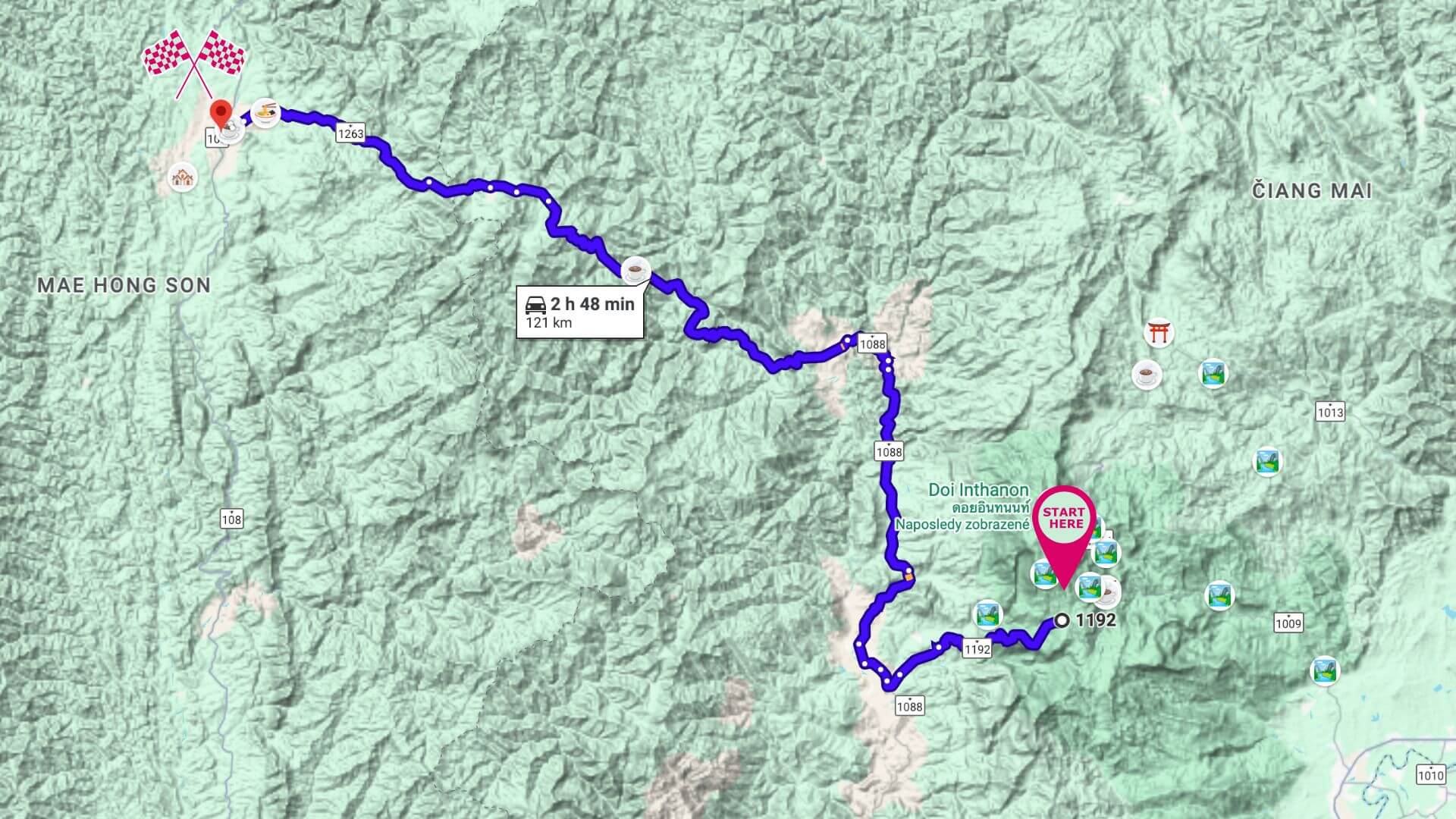
Strech 2: Doi Inthanon → Khun Yuam

Approx: 120 km / ~3h riding time

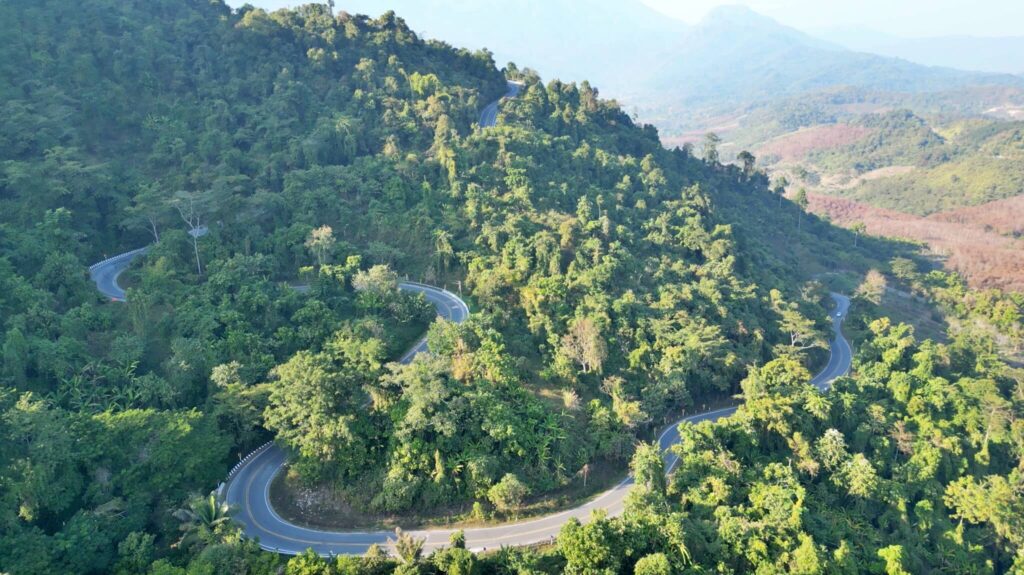
This stretch is one of those parts of the loop that feels quietly special, not because it’s packed with famous sights, but because the riding itself is the highlight. Traffic is usually light, the scenery opens up beautifully, and the road has that calm, remote feeling that makes you settle into a really nice rhythm.

One thing to know in advance: compared to other parts of the loop, this section has fewer “classic tourist stops” right on the main flow of the ride. You’ll still find a few great cafés with panoramic views (the kind where you stop “just for a drink” and end up sitting there for 60 minutes), but it’s not a waterfall-every-20-minutes kind of day, it’s more of a ride-and-breathe section.

Map Doi Inthanon to Khun Yuam by motorcycle

How to use this stretch in your plan

You have a couple of good options, depending on your pace:

  • Option 1: Ride it as a full-day trip from Chiang Mai via Doi Inthanon and a make Khun Yuam your overnight stop.
    Khun Yuam is a quieter, smaller town with fewer hotel options than places like Pai or Mae Hong Son. It works well as a practical sleep point – shower, dinner, early night – but don’t expect much nightlife or a buzzing evening scene. It’s calm, simple, and functional. It will be long day, but you should be fine if you start early from Chiang Mai.

  • Option 2: Combine it with the next stretch and ride through to Mae Hong Son in one day.
    If you’re comfortable with a longer day in the saddle, you can treat Khun Yuam as a quick break rather than a destination and continue onward. This can be a great choice for experienced riders who prefer fewer check-ins and more continuous mountain riding.

Thai roads - Mae Hong son

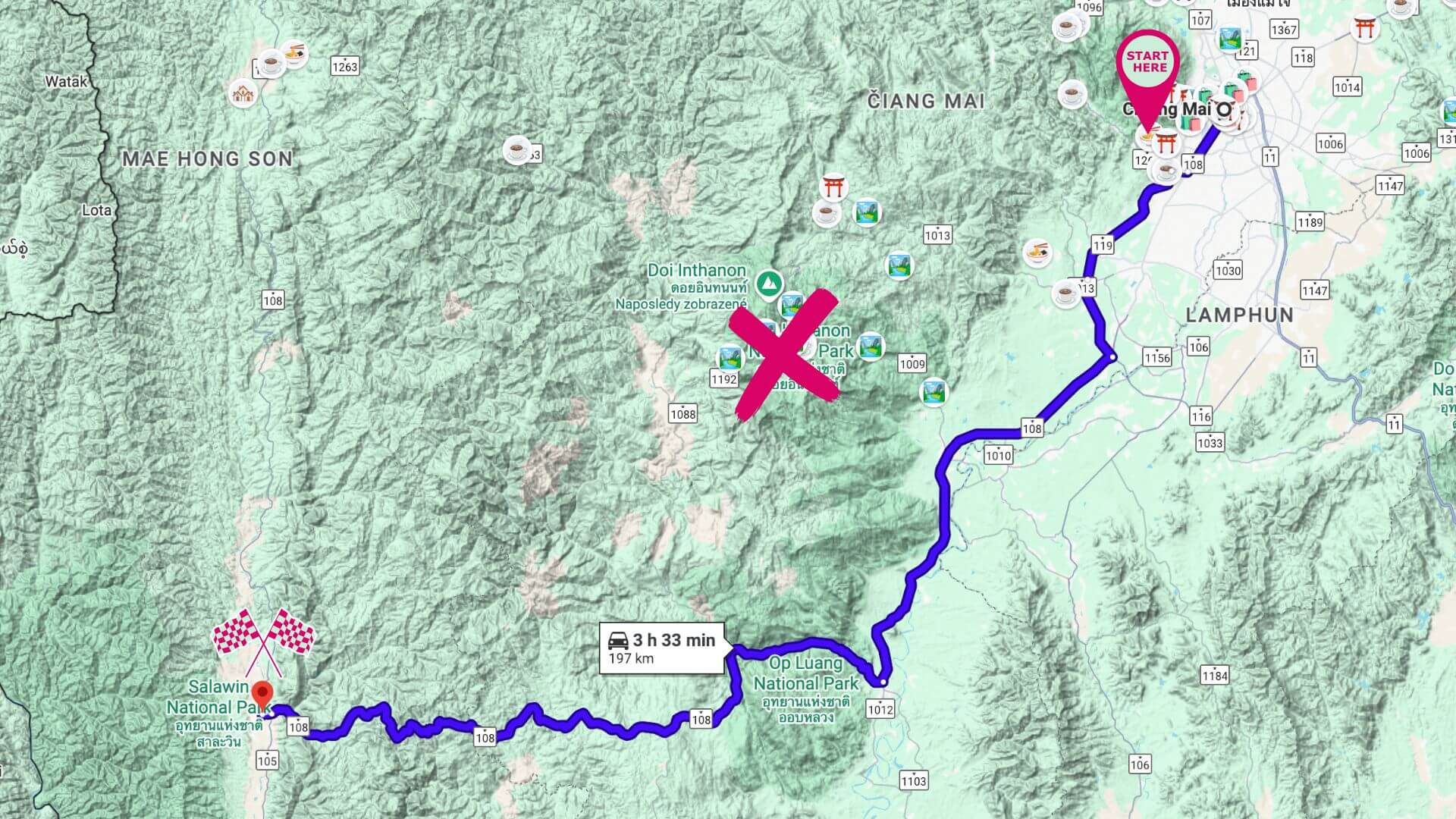
Alternative between Stretch 2 and 3: Skipping Doi Inthanon via Mae Sariang

If you want a simpler version of the loop, you can absolutely skip Doi Inthanon and connect the route through Mae Sariang instead. The riding is still good, the scenery is still very much “Northern Thailand mountains,” and it’s generally less demanding technically than the more twisty, high-focus mountain sections.

My honest tip: compared to the Inthanon route, this option can feel a bit more… boring. Not bad at all, just less special in terms of riding variety. That’s why I personally recommend going via Doi Inthanon whenever you can. But if you’re looking for an easier day, want to keep the pace mellow, or you simply prefer a more relaxed rhythm, the Mae Sariang option still delivers plenty of beautiful mountain views without the same intensity.

Map: Doi Inthanon to Mae Sariang on motorcycle

Strech 3: Khun Yuam → Mae Hong Son

Approx: 65 km / ~1h15 riding time

What to expect on the road

It’s mostly mountain views, rolling bends, and a few viewpoints that are perfect for a quick stop without derailing your schedule. If you want one reliable photo-and-wow moment on this stretch, add Pha Bong Viewpoint — a simple pull-over that gives you that classic Northern Thailand mountain panorama without any effort or long detour.
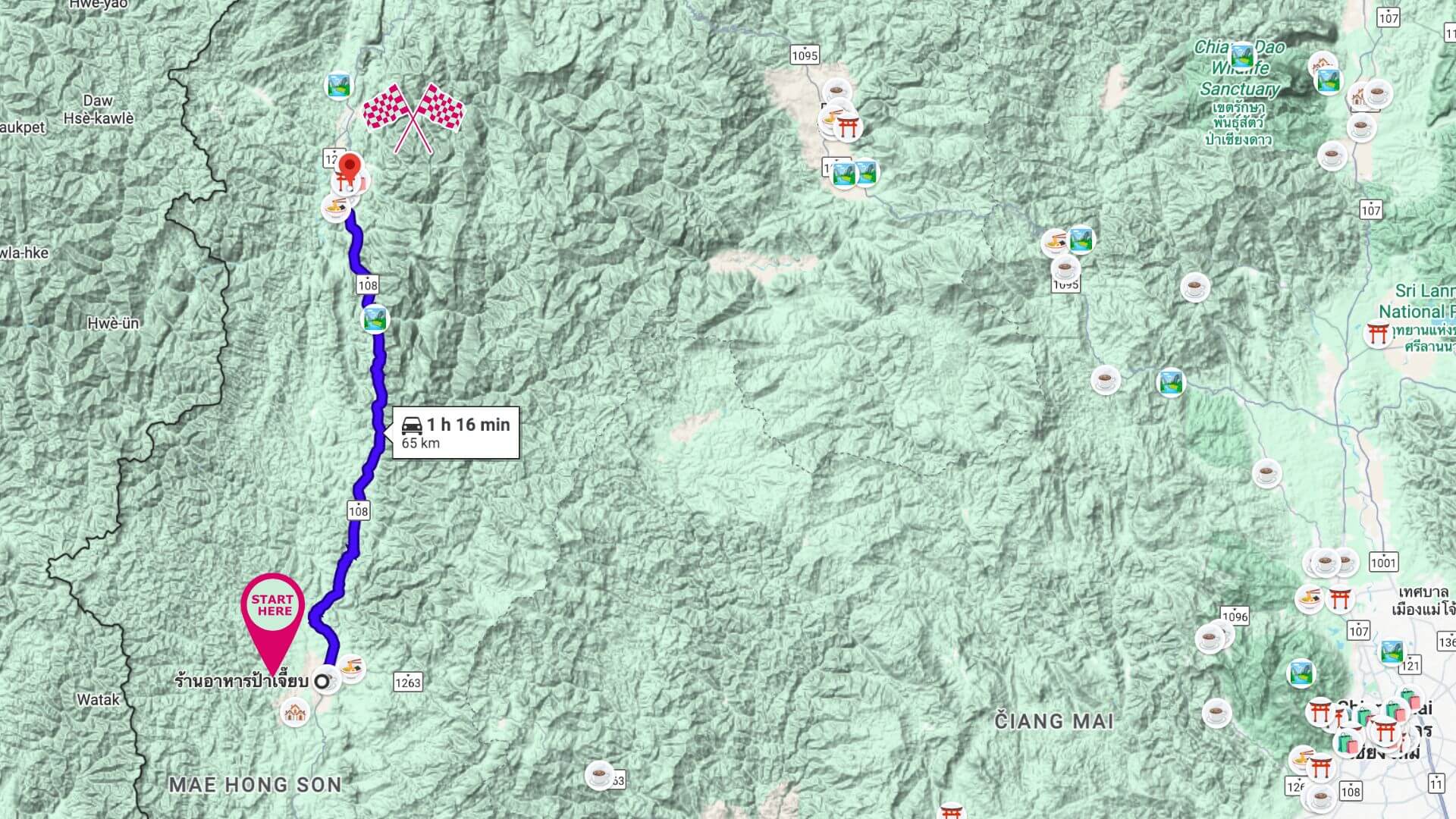
Map Khun Yuam to Mae Hong Son on motorcycle

If your body is feeling the previous day’s corners, you’ll also pass hot springs on the way into town. They’re an easy add-on for a short break, especially if you want to arrive in Mae Hong Son feeling refreshed rather than stiff.

Mae Hong Son is one of the larger mountain towns on the loop, so it feels more “set up” than smaller villages like Khun Yuam. That usually means more accommodation options, more food choices, and an easier evening –  a good place to sleep if you want comfort and a bit of atmosphere.
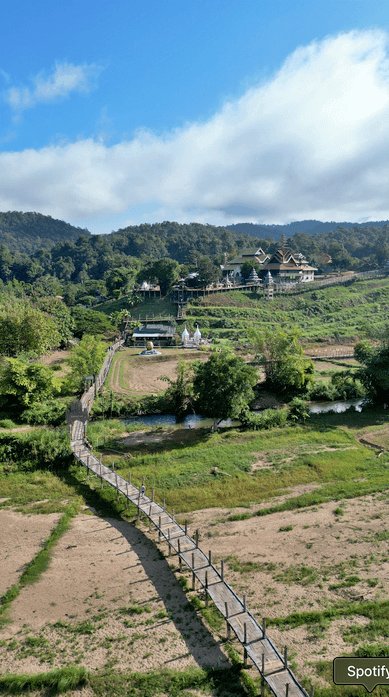
bamboo bridge

What to see on the way

  • Pha Bong Viewpoint: it’s a short pull-over with a small local market area where you can grab a drink or snack, and the main reason to stop: a canyon view that makes the landscape feel bigger than you expect from a simple roadside viewpoint.
  • Wat Phra That Doi Kong Mu: the temple on the hill above town. Go in late afternoon if you can — it’s one of the best viewpoints in the area and a perfect “end of day” stop.
  • Su Tong Pae Bridge: a bamboo bridge walk just outside Mae Hong Son, popular for a reason. It’s a peaceful leg-stretch and a nice change of pace after the twisty riding.
  • Evening market: an easy wander and great local food.

If you’re choosing between Khun Yuam and Mae Hong Son as an overnight stop, the difference is straightforward: Khun Yuam is quieter and more basic, while Mae Hong Son gives you more comfort, more choice, and more to do once the riding day ends.
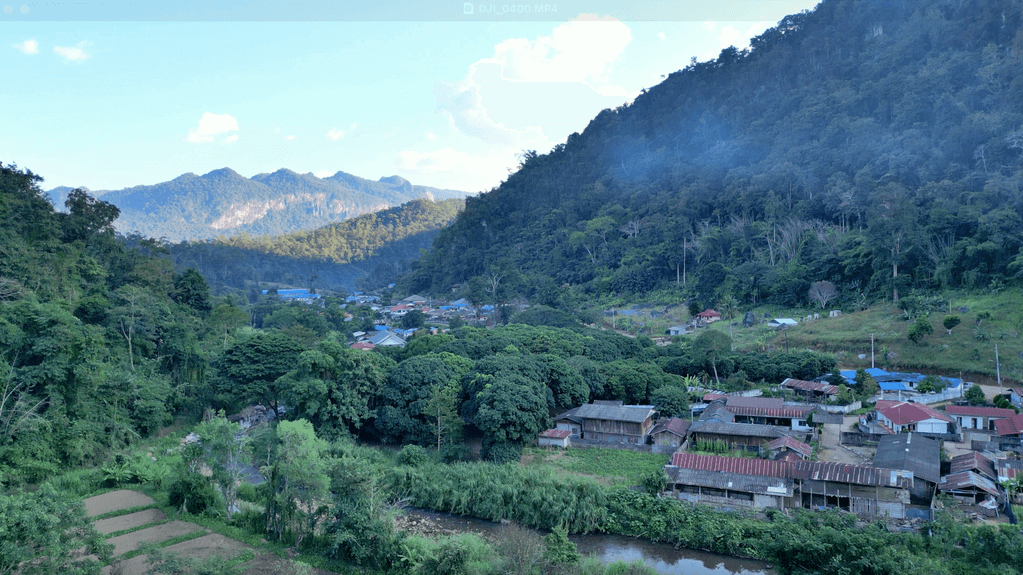
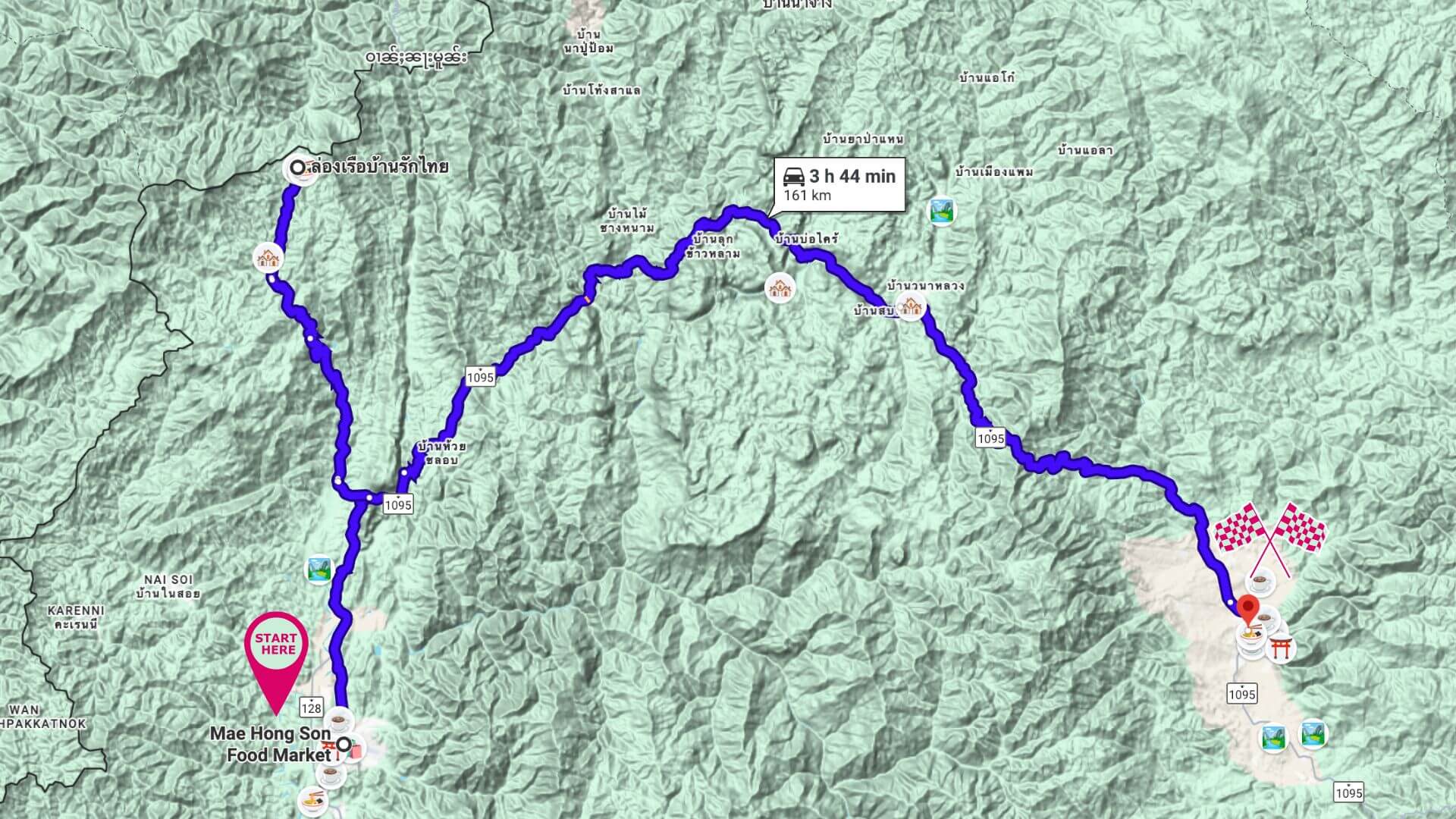
Northern Thailand moto tour

Stretch 4: Mae Hong Son → Pai

Approx: 100 km / ~2h20m riding time

This stretch is a genuine highlight. The road out of Mae Hong Son toward Pai is the kind of smooth, flowing mountain tarmac where you naturally find a rhythm and the kilometres pass effortlessly. It’s not a day to rush. Think of it as a “ride for the ride” section: stop when a view pulls you in, grab a drink, and let the road set the pace.

Map: Mae Hong Son to Pai on motorcycle

What to see on the road

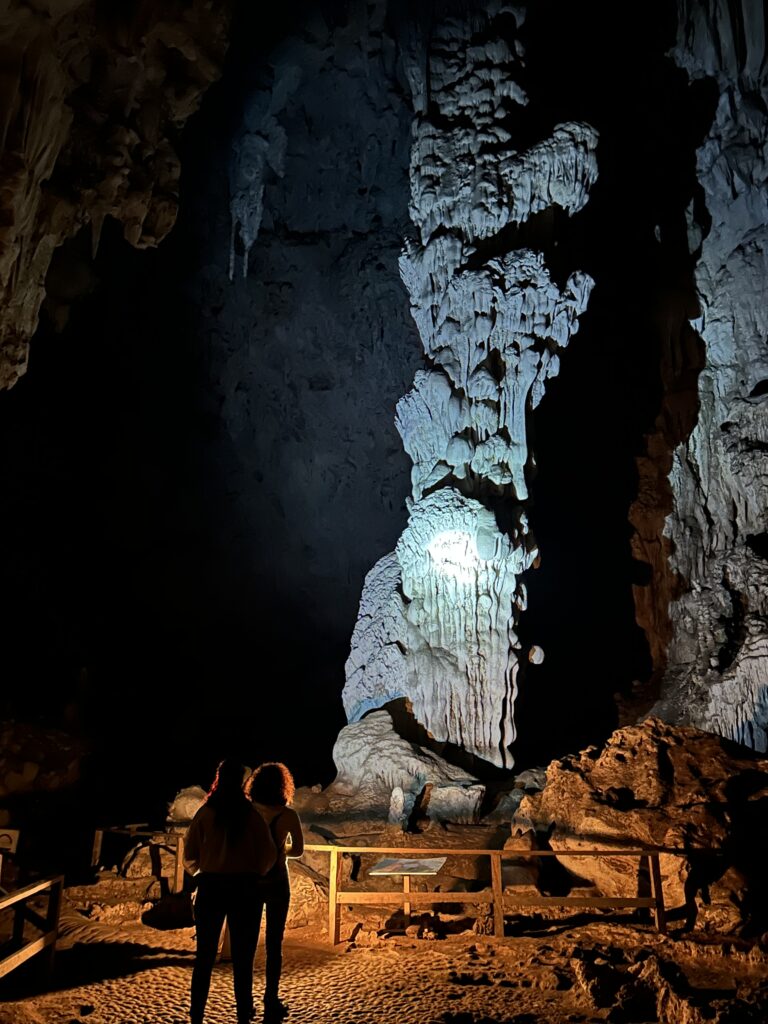
Nam Lod Cave
If you want one detour that feels like a proper mini-adventure rather than “another quick stop,” this is it. It breaks up the riding day perfectly and adds variety without turning your route into a detour marathon. Try to arrive earlier if you can — later in the morning it often gets busy. Entry is with a local guide and a petrol lamp, which is part of the experience.

Motorcycle female tour - cave Thailand

Phu Pha Mok viewpoint
This one is a bit off the main road, but if the timing works, especially in the morning or later afternoon light, it can give you those wide, dramatic mountain views that make Northern Thailand feel endless. It’s the kind of place that’s worth the small extra effort when you’re not pressed for time.

Cliffside cafés and viewpoint pull-offs
This stretch has several cafés and pull-offs with genuinely big views. They’re perfect for a short break, and they’re also a smart way to keep the day relaxed: stop for ten minutes, reset your focus, then keep riding.

Phu Pha Mok viewpoint

Arriving in Pai: choose your pace

By the time you roll into Pai, you may arrive later in the afternoon or early evening — and that’s completely fine. Pai is a relaxed, slightly hippie town, but it’s also one of the more tourist-heavy hubs on the loop. That means there’s a lot to do, but it can also be busy, especially in peak season.

If you only have one evening here, keep it simple:

  • Night market + dinner is the perfect end to a full riding day.

If you have a bit more time (and energy), these are the classic highlights:

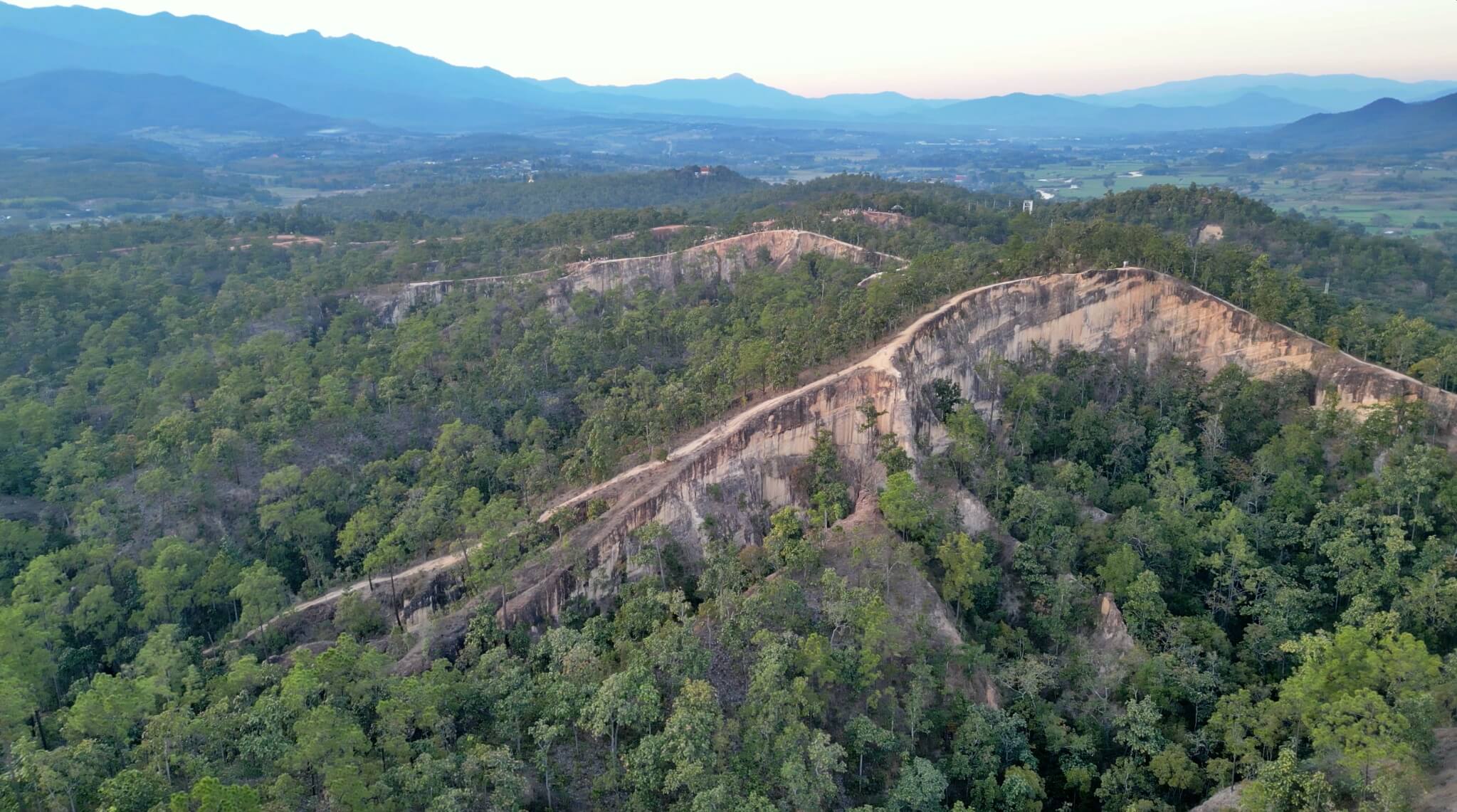
  • Pai Canyon at sunset — beautiful views, usually crowded, still worth it if you go in with realistic expectations.

  • Big Buddha Pai — short ride, short climb, great viewpoint above town.

Big Buddha Pai

And yes, if you’re in the mood for it, Pai can also be social: lots of backpackers, younger travellers, and plenty of places to stay out late. But if your trip is more ride-focused and you’re tight on time, one night in Pai can be enough — you’ll still get the atmosphere, the food, and that “we made it” feeling without turning it into a full rest stop.

If you want to slow down and actually relax, Pai is one of the best places on the loop to do it — cafés, easy mornings, and a softer rhythm before the final ride back toward Chiang Mai.

Canyon Pai sunset

Optional Add-On: The Ban Rak Thai Climb

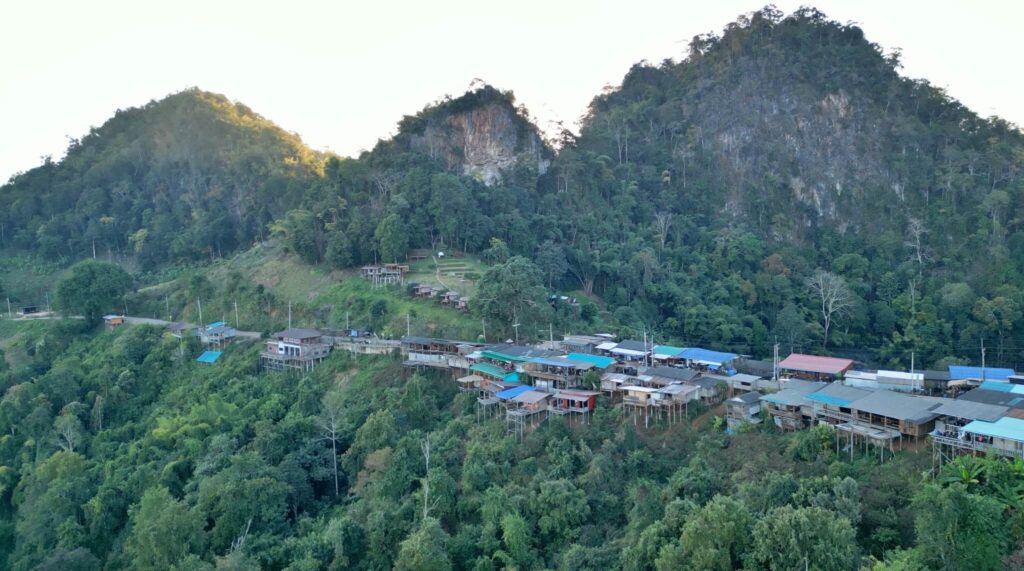
Ban Rak Thai is not “just a quick turn-off.” The road up is steep, twisty, and properly mountainous, which is exactly why it’s so memorable – but also why it’s important not to leave it for late afternoon when you’re tired or the light is dropping.

If you plan it with enough buffer, arriving in Ban Rak Thai feels like stepping into a different world: lakeside restaurants, tea houses, a calm evening atmosphere, and that slower, slightly romantic vibe the village is known for. It’s the kind of place that’s best enjoyed unhurried – not as a last-minute dash.

Strech 5: Pai → Chiang Mai

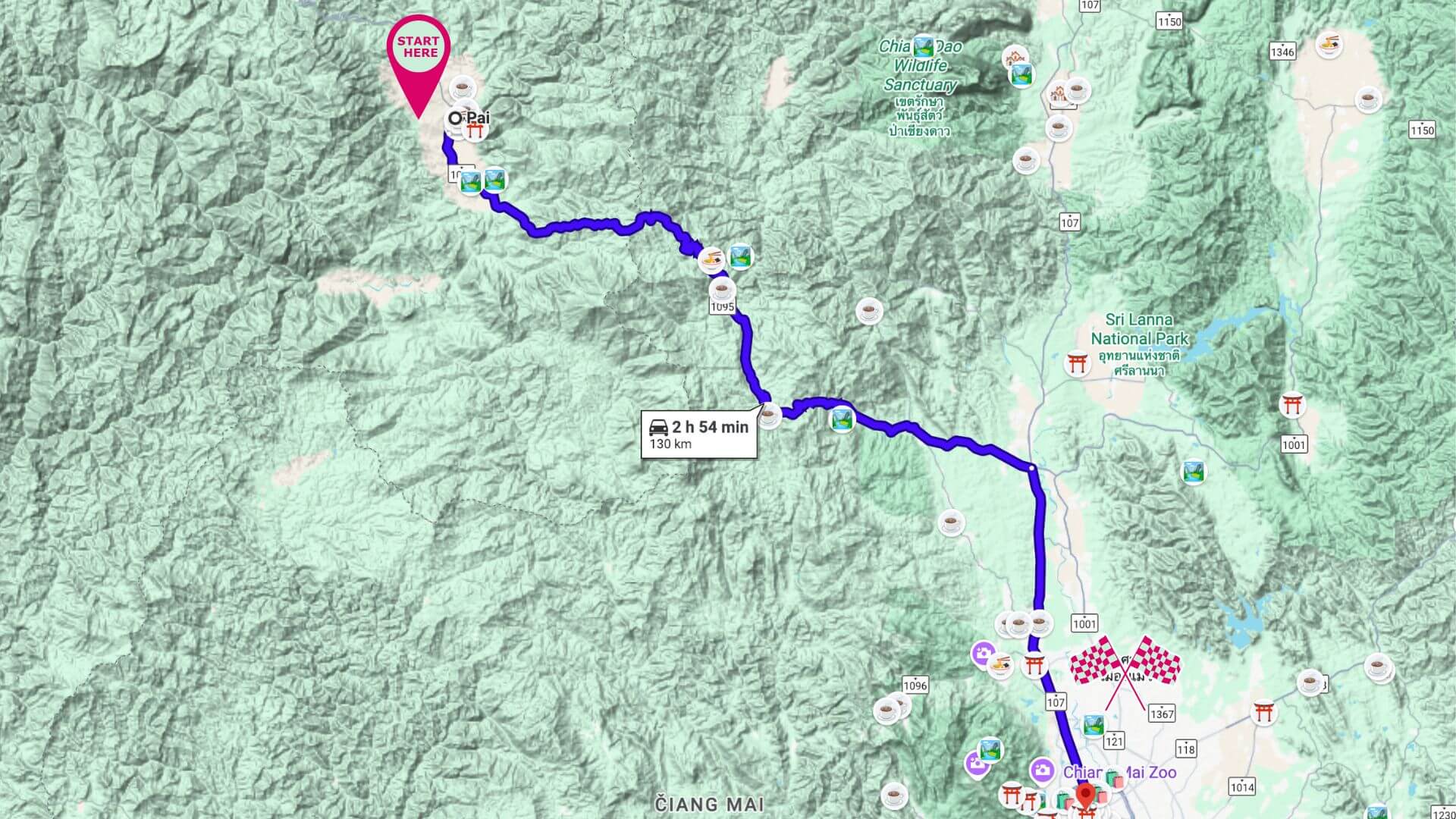
This final leg is where most people feel the biggest contrast on the loop — not because the road isn’t beautiful (it is), but because it’s the most popular corridor and the traffic can change a lot depending on the time of day. The good news is: you have two solid options, and they suit two different moods.

Option A: The Main Route 1095 (the classic, faster way)

Approx: 130 km / ~3 hours

This is the standard Pai–Chiang Mai ride and, honestly, it’s popular for a reason. The road has a great flow and there are several stops that are genuinely worth building in, especially if you want your final day to feel like part of the trip, not just a ride back to the city.

Map: Pai to Chiang Mai on motorcycle

What to see on the road:

  • Pong Dueat Hot Springs (Geyser)
    One of the most memorable hot spring stops in the area. It’s set in the forest, feels natural, and the geyser-style steam and bubbling water makes it more interesting than a simple “soak pool” stop. It’s a great option in the morning when the air is cooler.

  • Mok Fa Waterfall
    A strong, satisfying waterfall stop that doesn’t require a big detour. It’s the kind of place where you can park, walk a short distance, and get an instant nature reset, perfect if you want a break before the final twisty section into Chiang Mai.

The trade-off: this route can get busy later in the day, so if you can, ride it earlier for the best experience.

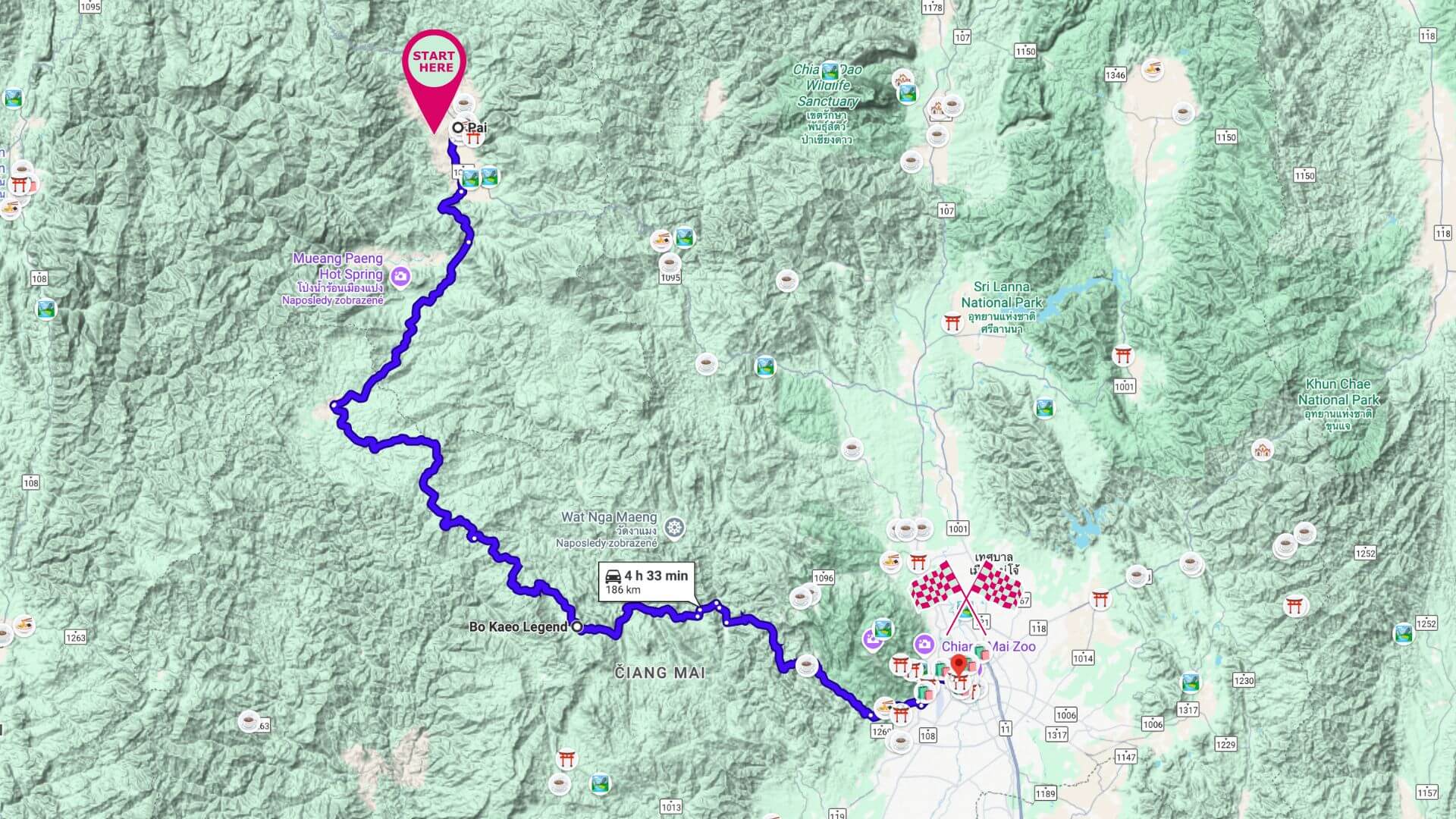
Option B: The Mountain Backroad (longer, quieter, more technical)

Map: Pai to Chiang Mai on motorcycle, inside the mountains

Approx: 190 km / ~4h30
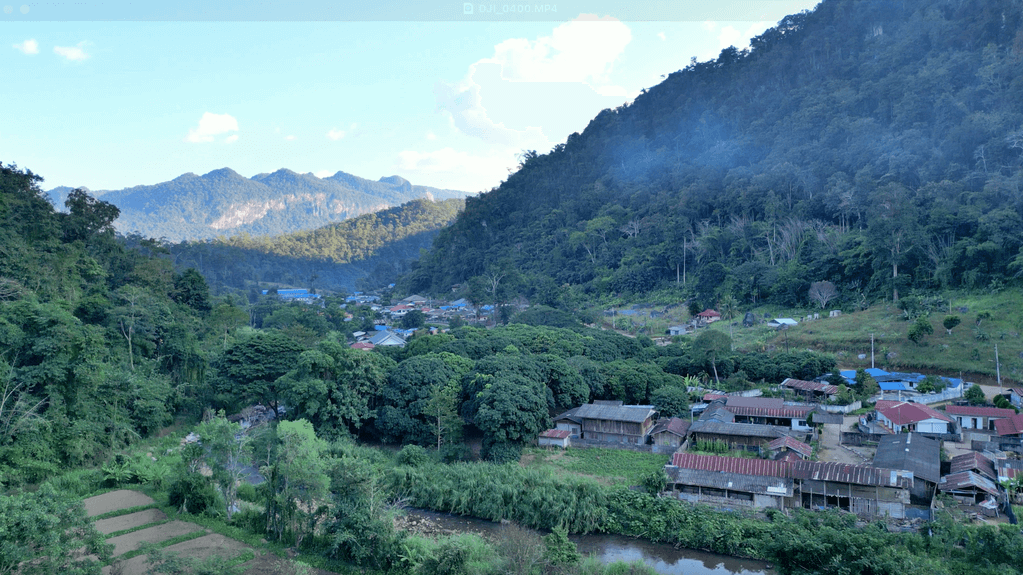
What it’s like: This version feels more “deep north”: smaller mountain roads, tighter corners that are less flowing and more technical, and a generally quieter atmosphere. Instead of tourist-style stops, you’ll pass more small villages, local farms (including strawberry farms in some areas), and rural scenery that feels less curated and more everyday Thailand.

The trade-off: It takes longer, and the riding can feel more demanding simply because the corners are tighter and the road rhythm is less predictable. This is the kind of route you choose when you want the ride itself to be the main event — and you’re happy to spend most of the day on the bike.

Best for: confident riders who want less traffic, don’t mind a longer day, and enjoy a more technical mountain-road feel.

How to choose (quick and honest)

  • If you want more stops, more convenience, less time, take Option A.

  • If you want quieter roads and a more remote feel, take Option B – and treat it as a full riding day with buffer.

Road Condition

The Chiang Mai to Pai stretch is the busiest, by far.

This is the one section where you will most likely share the road with a lot of traffic, including minivans doing minivan things.

What helps:

  • Ride it early. In my experience it feels calmer in the morning and gets noticeably more hectic later in the day.
  • Expect wide corner lines from others. Some drivers cut close to the center line, especially through faster bends.

If you want one mental rule for this section: ride like you expect a surprise around the next bend, and you will be relaxed when it happens.

The Khun Yuam to Mae Hong Son area feels remote, and that’s part of the charm.

Once you are deeper into the loop, it often gets wonderfully quiet.

Daylight ends fast. Plan like you want to arrive early, not “just in time”.

Thailand does not do long European sunsets. When it gets late, it gets dark quickly, and mountain roads become a different experience.

What helps:

  • Aim to be checked into your accommodation before late afternoon.
  • If you stop for a viewpoint or sunset, do it close to where you are sleeping.
  • If you are choosing between one more detour and a relaxed arrival, choose the relaxed arrival. It makes the whole trip feel better.

Morning fog is real in the mountains.

Depending on season and elevation, you can get mist or low cloud layers in the morning. It often clears later.

What helps:

  • Do not rush the first hour if visibility is messy.
  • Keep your pace smooth, the road will be wet.

The surface is mostly excellent, but the “small surprises” are what catch people.

The loop is generally well paved, which is why it’s so popular. The hazards are usually not huge potholes. They are small things that appear at exactly the wrong moment.

Watch for:

  • Gravel or sand in corners near driveways, roadworks, and viewpoint pull-offs.
  • Wet patches in shaded sections even when the rest of the road is dry.
  • Animals. Dogs, chickens, and occasionally larger farm animals in rural areas. 

Best Time to Ride the Mae Hong Son Loop

There isn’t one perfect month for everyone, but there is a very clear pattern: the Mae Hong Son Loop is at its best when the air is clear, the roads are dry, and the temperatures make long riding days feel easy.

Cool season (roughly November to February): the best overall window

This is when the loop feels like it was made for motorcycling.

What you get:

  • Dry roads and not so hot days.
  • Clearer views, especially in the mornings
  • Comfortable temperatures for long days in the saddle

What to watch for:

  • Cold mornings and evenings at elevation, especially around Doi Inthanon and other high points. If you’re riding early, a light layer makes a big difference.
  • Popular weeks can get busy (especially around holidays), so plan your start times and don’t leave everything to the last minute.

If you want the “classic Mae Hong Son Loop experience,” this is the season I’d choose.

Hot season (roughly March to May): doable, but the atmosphere changes

The roads can still be dry and rideable, but the overall experience depends heavily on temperature and air quality.

What you get:

  • Dry pavement and long, bright days
  • Fewer travelers in some areas (outside of Thai holidays)

What to watch for:

  • Heat builds quickly, especially in lower valleys and midday traffic
  • It’s harder to keep energy levels stable across a long day

If you ride in this season, your best tool is timing: start early, take longer midday breaks, and keep your afternoons shorter.

Smoke season (often overlaps late dry season): the one that can ruin the magic

Some years, Northern Thailand gets heavy agricultural burning and the air quality can drop dramatically. On a bike, that changes everything. Even if the road is technically fine, the ride can become hazy, hot, and less enjoyable.

My honest advice:

  • If air quality is poor, don’t force it. The loop is famous for views and fresh mountain air. Without that, it’s like ordering a cappuccino with no coffee.
  • Have a backup plan: shorter local rides around Chiang Mai, or shifting your loop to a clearer window if possible.

Rainy season (roughly June to October): still possible, just ride it differently

Rainy season doesn’t mean nonstop rain all day, every day. It often comes in bursts, and you can still have beautiful riding days. But the loop becomes more variable.

What you get:

  • Lush green scenery, waterfalls at their best
  • Fewer riders on the road, calmer towns
  • Cooler temperatures than peak hot season

What to watch for:

  • Slippery patches (paint lines, wet leaves, shaded corners)
  • Occasional road damage or debris after heavy rain
  • Reduced visibility in mist and cloud, especially in the mountains

If you ride the loop in the rainy season, plan shorter days, start early, and keep your pace conservative. It can still be an amazing trip, just a more “flow with the weather” version.

Most riders enjoy it most in 4 to 5 days, because the loop is “curves and concentration,” not a quick highway dash. 4 days works beautifully on a bigger bike if you keep days balanced and avoid stacking too many detours on one afternoon. 5 days is the sweet spot if you want sunsets, coffee stops, and zero rushing. If you are on a scooter, riding two-up, or you simply like slower mornings, plan 6 to 7 days and the whole trip becomes calmer and more enjoyable.

In practice, it matters less than the internet suggests. I’ve ridden it both ways and, if your riding days are similar length, the loop feels great in either direction. The only consistent difference is traffic timing on the Chiang Mai to Pai road, which tends to be quieter in the morning and busier later. So pick the direction that matches your overnight plan and mood, then plan that Chiang Mai to Pai section for an early start, whether you ride it at the beginning or the end.

Yes, scooters do the loop all the time, but your experience depends on your bike choice and your pacing. For a relaxed trip, a 150cc class scooter is generally a better idea than a small 110 to 125, especially if you are riding steep sections, carrying luggage, or going two-up. A smaller scooter can still work, it just means slower climbs, more planning, and ideally extra days so you are not pushing long distances. Bigger bikes make the loop feel easier, but only if the rider is comfortable handling the weight on tight mountain corners.

Rainy season can still be a great time if you ride it differently. You get lush scenery and fewer crowds, but you also get more variability: sudden rain bursts, slippery paint lines, wet leaves in shaded corners, and occasional debris after storms. The winning strategy is not bravery, it’s planning: shorter days, earlier starts, and a pace that stays smooth even when the road is damp. If your goal is “perfect views and dry corners,” cool season wins, but rainy season can be beautiful when you accept the rhythm.

If the air quality is poor, yes, I would avoid it. The Mae Hong Son Loop is famous for mountain views and that fresh, open feeling. Smoke turns the scenery grey, makes long riding less pleasant, and can leave you tired faster. Some people don’t take the smoke well and have breathing issues.

Expect that checkpoints can happen, especially around tourist-heavy areas, and they typically care about basics: the rider’s licence, an International Driving Permit if applicable, and helmet use. My advice is simple: ride legally and carry the documents you need, because it protects you in two ways, with police and with insurance. Riding without the correct licence is not a clever hack, it’s a liability that can turn a small incident into a bigger financial problem. Also, do not assume your travel insurance covers riding by default, check the motorcycle clause, engine size conditions, and licence requirements before you fly.

Yes, if your home licence is not Thai. Police checkpoints do happen, especially near tourist areas, and insurance validity often depends on having the correct licence and IDP. Riding without it isn’t a clever shortcut, it’s unnecessary risk.

The classic loop is roughly 600 km, but the exact number depends on the route variations and detours you choose. Adding places like Doi Inthanon, Ban Rak Thai, caves, waterfalls, or alternative mountain roads can easily extend the distance. That’s normal, and it’s part of what makes this loop flexible.

The loop traditionally starts and ends in Chiang Mai. From there, it circles west and north through the mountains via Doi Inthanon, Mae Sariang or Khun Yuam, Mae Hong Son, Pai, and back to Chiang Mai. You can ride it clockwise or counterclockwise and still experience the same landscapes and highlights.

Comments are closed