I first rode in Thailand in 2016. What was supposed to be "just one trip" turned into almost a decade of returning — first for a month or two, eventually for half the year. I've ridden most of Northern Thailand's mountain provinces: Chiang Mai, Chiang Rai, Mae Hong Son, Nan, Lampang, Phayao, Phrae and beyond. Sometimes more than once, in different seasons, on different bikes.
I've also guided women here. Women who came from Norway, the Netherlands, Slovakia, South Afrika. And almost every single one of them asked the same questions before they arrived. Questions about licences, insurance, which bike to choose, whether the heat would be unbearable, and honestly, whether Thai traffic would kill them.
It won't. But you do need to understand it.
This article is everything I wish someone had told me before my first riding season in Thailand — told from the perspective of a woman who grew up riding in Europe, and who now spends significant time each year guiding other women through these mountains.
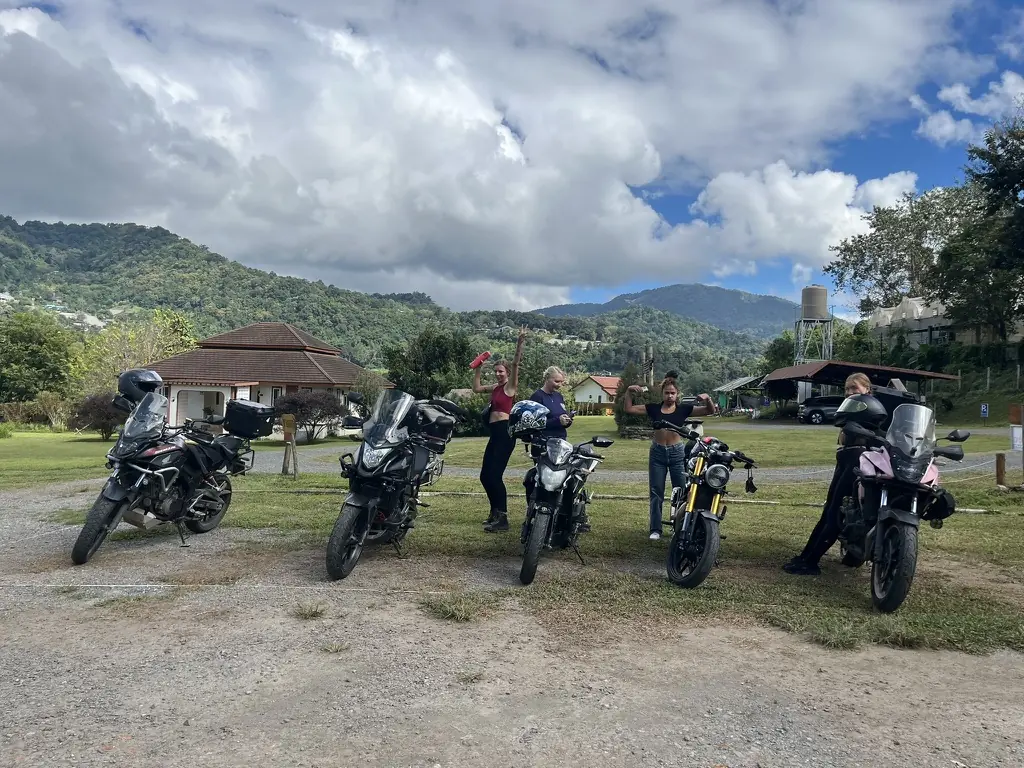
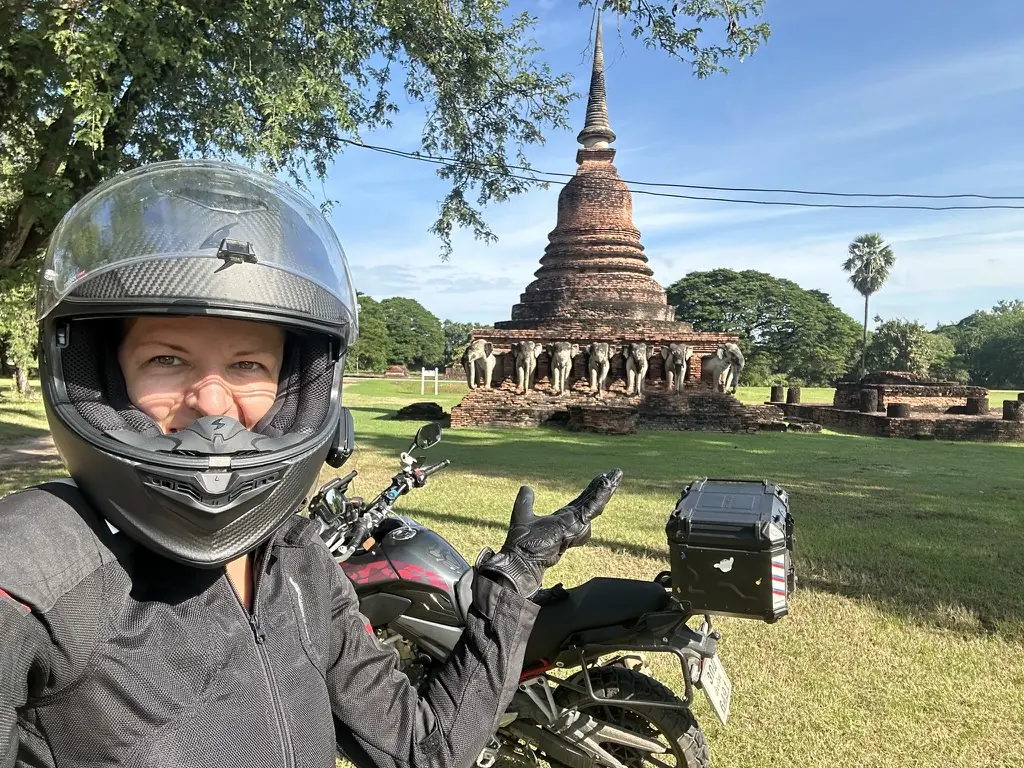
Table of Content
1. Your Licence — The Part Most People Skip
Let's get the bureaucratic bit out of the way first, because it genuinely matters.
What you need
Your national driving licence alone is not enough. To ride legally in Thailand — and to be covered by your travel insurance if something goes wrong — you need two things:
- Your national motorcycle licence (valid for the cc category you intend to ride)
- An International Driving Permit (IDP)
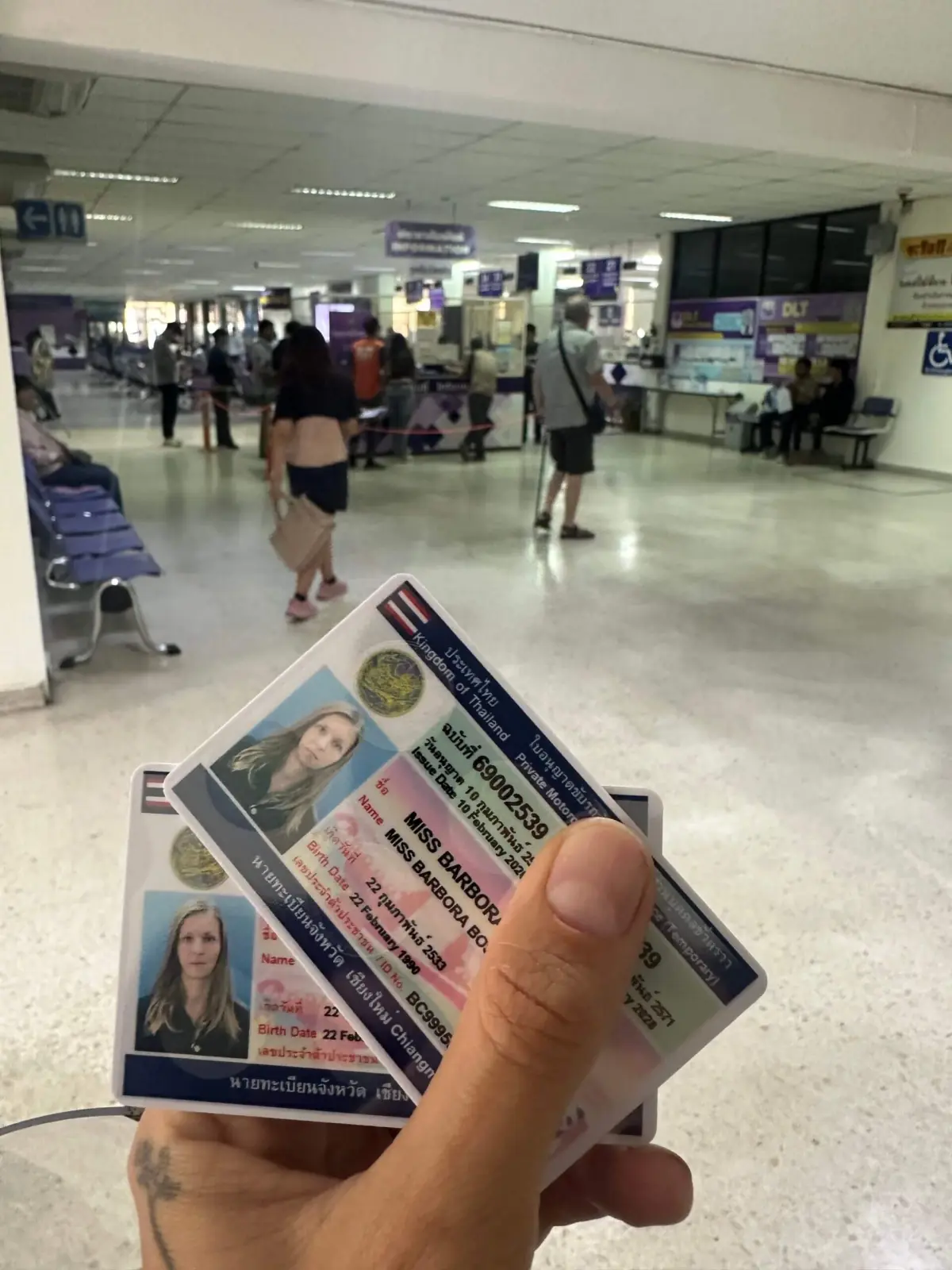
The IDP is an official, translated version of your licence that Thai police and insurance companies can actually read. Without it, you can be fined (in Chiang Mai it's 500 THB — not the end of the world), but more critically, your travel insurance can refuse to pay medical bills if you're involved in an accident.
How to get it
In most European countries, you apply at a post office, police station, or motoring association (like ADAC in Germany, AA in the UK, or ÖAMTC in Austria). It usually takes a few days, costs a small administrative fee, and is valid for one or three years.
In Australia, you apply through your state's motoring authority — the NRMA, RAA, RACQ, RACV and so on. Same idea, same simplicity. If you haven't done it before your trip, do it now.
A note for A2 licence holders
If you're riding in Europe on an A2 licence (the intermediate EU category — up to 35 kW / 47 hp), your IDP covers exactly what your national licence covers. In Thailand, that's perfectly functional. The bikes I recommend for most women in the mountains fall well within A2 territory anyway — more on that below.
If you've already upgraded to a full A licence, even better.
Australia: you have a built-in advantage
Left-hand traffic. Thailand drives on the left — the same as Australia. If you're coming from Sydney, Melbourne, Brisbane or Perth, your brain already knows this side of the road. You won't need the mental recalibration that every European rider goes through in the first day.
2. Insurance — What's Actually Covered (And What Isn't)
Insurance in Thailand is more nuanced than most people expect. Here's the honest breakdown.
Medical coverage
If you join an organised guided tour, the operator is legally required to carry medical insurance for participants — typically around 1 million THB per person.
If you rent a bike independently, the rental shop is also legally required to carry basic medical liability coverage. So for your body, you have a baseline layer of protection either way.
But — and this is the part people miss — none of this covers damage to the motorcycle itself.
The bike damage gap
This is a genuinely different system from Western Europe or Australia. The most reputable big-bike rentals in Chiang Mai do not offer any kind of additional damage insurance. If you tip the bike over on gravel, scratch it on a tight corner, or scrape a mirror in a car park — that's your cost.
What to do:
Before you fly, check whether your travel insurance includes a "rental vehicle damage" add-on. Most major insurers offer this as an optional module, and it's usually inexpensive. For small cosmetic scratches, it's often not worth claiming anyway — minor scuffs are common, and Thai mechanics fix them cheaply. But for bigger damage, you'll want coverage.
One more thing: your insurance is invalid if you ride without the correct licence and IDP. Not a technicality. They will use it. Get the IDP.
3. Climate Differences — This Is Not a European Summer
If you're from northern Europe or from a temperate part of Australia, Thailand's climate will feel like arriving on a different planet. Here's what actually happens.
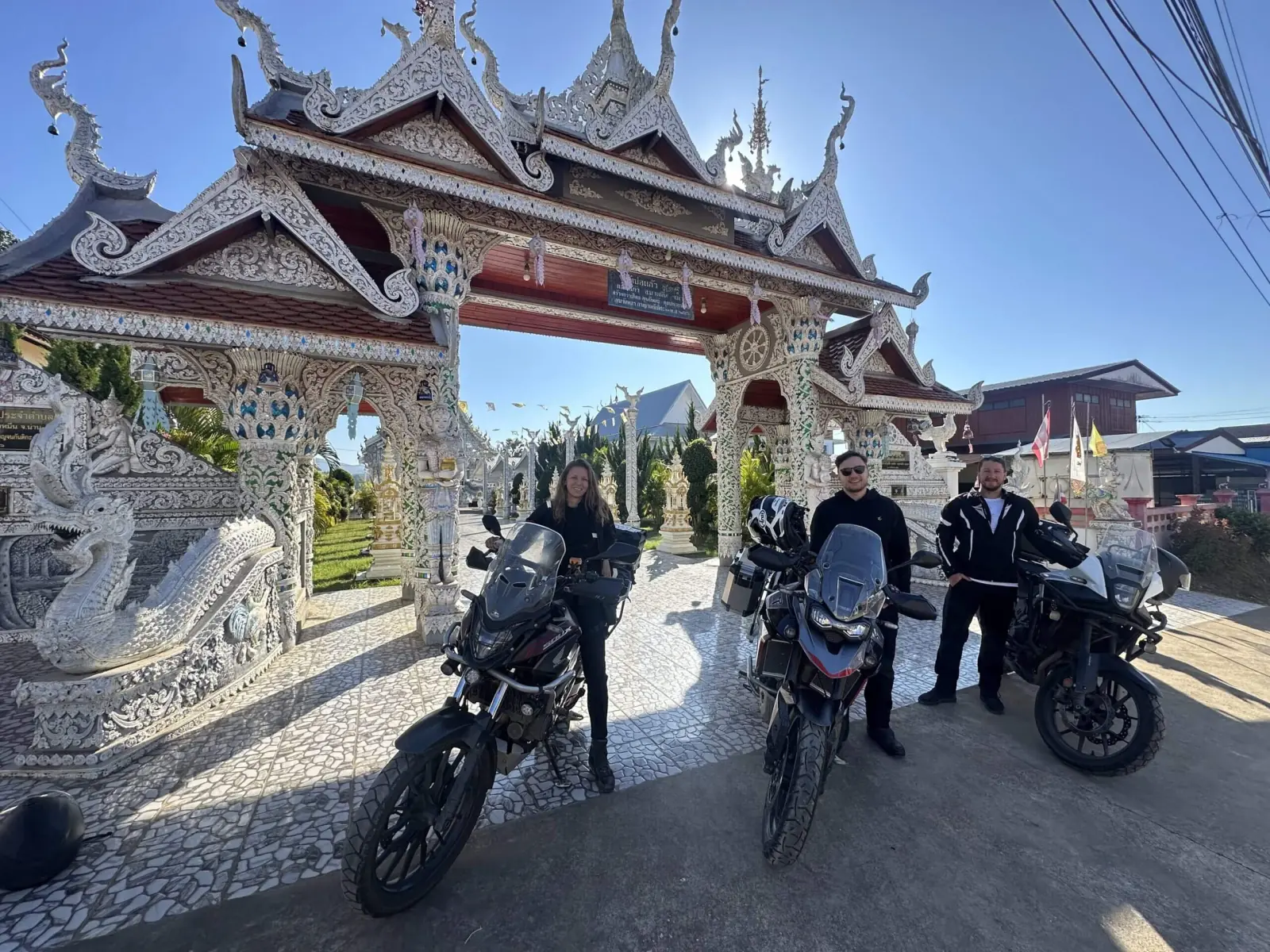
Northern Thailand: the riding season
The North — Chiang Mai, Mae Hong Son, Nan, Chiang Rai — has a distinct pattern:
| Period | What it's like | Verdict |
|---|---|---|
| November – January | Cool, dry, clear skies. Days 20–28°C, nights can drop to 15°C in the mountains | Golden window. Book bikes early |
| February – early March | Warmer, still beautiful, riding still excellent | Good, with caveats |
| March – mid May | Burning season — smoke, haze, reduced visibility | Avoid if you can |
| Jun – September | Rainy season — warm showers in the afternoon, lush landscape | Rideable, just be prepared to get wet sometimes |
| October | Air freshly washed, cooler temperatures, occasional showers | Hidden gem |
For European riders: if you're used to putting your bike in the garage in October and waiting until April, Thailand reframes everything. November to January is exactly when you'd normally be staring at your bike cover — and it's precisely when Thailand is at its best for riding.
For Australian riders: the Australian summer (December–February) lines up almost perfectly with Thailand's golden riding window. You can essentially extend your best riding months by flying north.
What surprises every new arrival
Mountain mornings during "winter" in Northern Thailand can be genuinely cold — you'll want a warm layer for early starts, and your riding jacket earns its place. By midday you're in 28°C heat. This temperature swing within a single day catches people off guard. Pack layers, not just sun protection.
The South is different
The islands and beaches run warm and humid year-round (27–34°C). Great for holiday riding, but no mountain curves and a very different vibe. Everything in this article is primarily focused on the North, where the riding is serious.
4. Traffic Reality — The Part Everyone Is Scared Of
Let me tell you what I tell every woman before she gets on a bike in Chiang Mai for the first time:
Thai traffic is not chaos. It's a different logic.
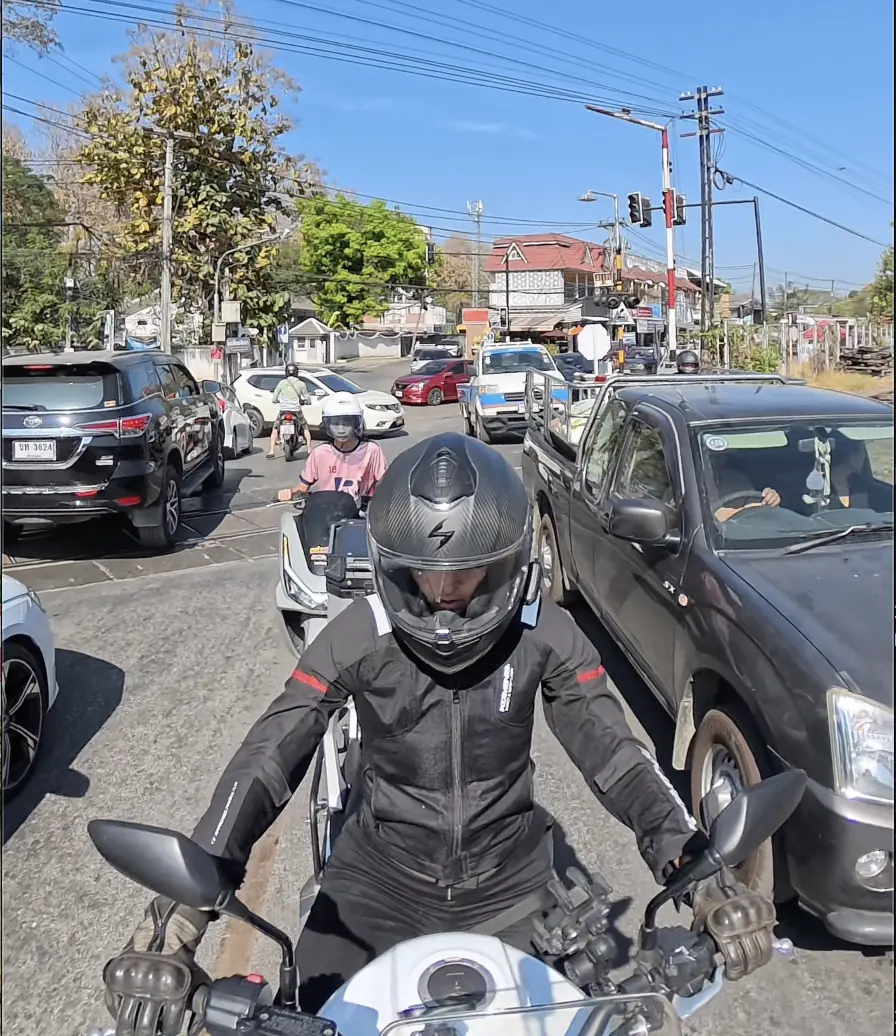
It runs on what Thais call sabai sabai — a kind of relaxed, no-drama flow. Less aggression, less ego, less of the "I'm in a hurry and my time matters more than yours" energy you might know from city riding in Germany, Spain, or parts of Australia. People flow around each other. They make room. There's a softness to it.
That said, you still need to understand the specific patterns.
The basics
- Drive on the left (natural for Australians; needs a mental reset for Europeans)
- Scooters are everywhere and they move through gaps you wouldn't expect
- Filtering to the front at red lights is normal — cars expect it and nobody reacts badly
- Shoulder checks are non-negotiable — scooters appear in blind spots constantly
- Intersections without lights work on eye contact and gentle negotiation, not strict right-of-way rules
- U-turns on highways are common and can be abrupt — slow down near U-turn zones
What makes Thai traffic genuinely easier than you'd think
Road quality in Northern Thailand is surprisingly excellent. In many places, the asphalt is smoother and better maintained than roads in Central Europe. You'll pass through tiny mountain villages with wooden houses and chickens in the yard — and then realise you're riding on freshly resurfaced tarmac. The contrast is almost surreal.
Cars also tend to drive more slowly in the mountains, and there's far less of the aggressive overtaking you might encounter on European mountain passes. Passing is often easier here, not harder.
What to watch for
- Old pickup trucks and vans — some run heavy smoke, some cut corners, especially on the tourist road between Chiang Mai and Pai
- Sand and mud after rain — can sit on the apex of corners and is invisible at speed
- Dogs on warm asphalt — they choose a direction and commit to it. Stay smooth, don't swerve
- U-turn zones — vehicles can appear mid-manoeuvre at any moment
- Riding after dark — avoid it in the mountains. Thailand has short daylight; plan your days to arrive before sunset
How it compares to home
If you've ridden in London, Madrid, Amsterdam or Sydney, you can handle Chiang Mai. City traffic is dense but predictable once you've absorbed the rhythm.
5. A2-Friendly Bike Options in Thailand
Good news: the bikes best suited to the A2 category are also the bikes most suited to female riders in Northern Thailand. This is not a coincidence — they tend to be lighter and lower.
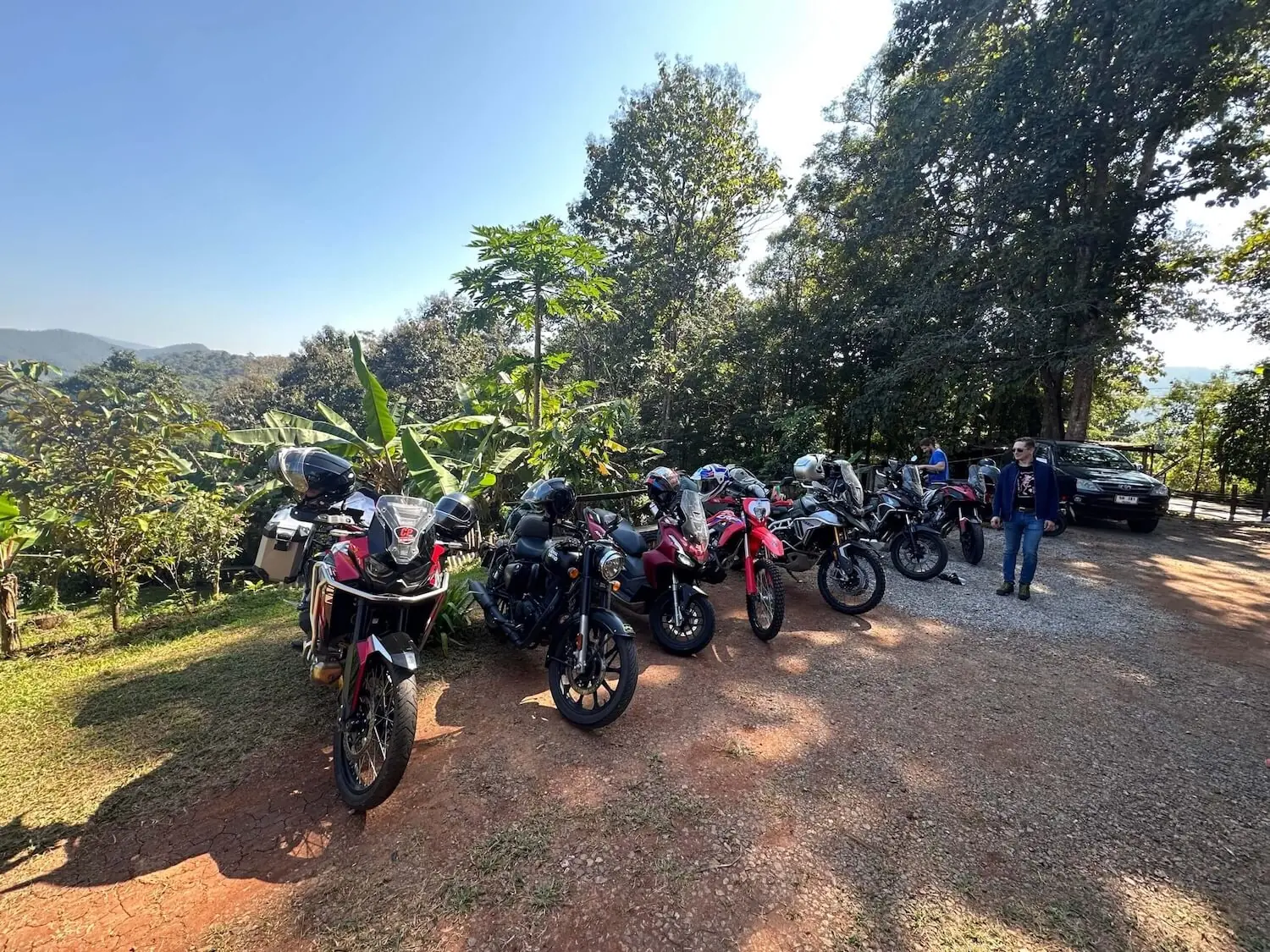
For smaller or less experienced riders (also A2-compliant)
These are the bikes I most often recommend to women who are newer to motorcycle travel, shorter in height, or coming back to riding after a break:
- Honda CB300R / CB300F — lightweight, manageable, surprisingly capable in the mountains
- Yamaha MT-03 — sporty feel, low seat, excellent for all-day curves
- Royal Enfield Himalayan / Meteor 350 — relaxed ergonomics, predictable handling
Overall, these bikes feel lighter, lower, and less intimidating to manage at slow speeds or at stops. They climb mountain passes well and are genuinely enjoyable to ride all day.
For more experienced or taller riders
If you're comfortable on bigger machines, or you have a full licence and want more power for long mountain days:
- Honda CB500X / NX500 — the workhorse of rental fleets in Chiang Mai for good reason. Versatile, reliable, comfortable
- Honda Transalp / Africa Twin — for riders who want adventure-touring capability
- Suzuki V-Strom 650 — smooth, torquey, forgiving
- Kawasaki Versys 650 — similar profile to the V-Strom, great for mountain touring
If you want something easy for temples, coffee runs and short exploring days, a scooter is often the simpler choice. The Honda Click, ADV 160 or ADV 350 can cover most of what you'd want around town. I think CityGlide is a great option to book one. You can order through their app, and they deliver the scooter straight to your hotel.
The seat height reality
Here's something rental shops in Thailand will not proactively tell you: lowered seats and lowered suspension essentially don't exist in Thai big-bike rentals. They keep bikes in standard configuration.
If you're around 160 cm or shorter, you will likely be on your toes. Even taller riders sometimes reach with just one foot flat.
My advice: before you fly, walk into a Honda or Yamaha showroom at home. Sit on the CB300R, the CB500X, the MT-03. Bounce the suspension. Feel what it's like to lean the bike slightly at a standstill. This is the most useful research you can do — and it takes 20 minutes.
6. Practical Things No One Else Will Tell You
A few final points that come from years of guiding women in Thailand rather than just reading about it:
Bring your own helmet. In practice, rental helmets in Thailand range from basic-but-usable to genuinely worrying. Big-bike shops offer better ones, but fit and hygiene are inconsistent. I carry mine as cabin baggage — security has never questioned it, and a crack in a checked helmet renders it useless.
Cash for the rental deposit. Generally, most reputable big-bike shops ask for either your passport or a cash deposit (10,000–20,000 THB). Many riders prefer leaving cash to keep their passport on them. Have this ready.
Book bikes in advance. In addition, the good rental shops in Chiang Mai — the ones with well-maintained fleets — get fully booked 6–8 weeks ahead during peak season (November–January). Don't leave it to arrival week.
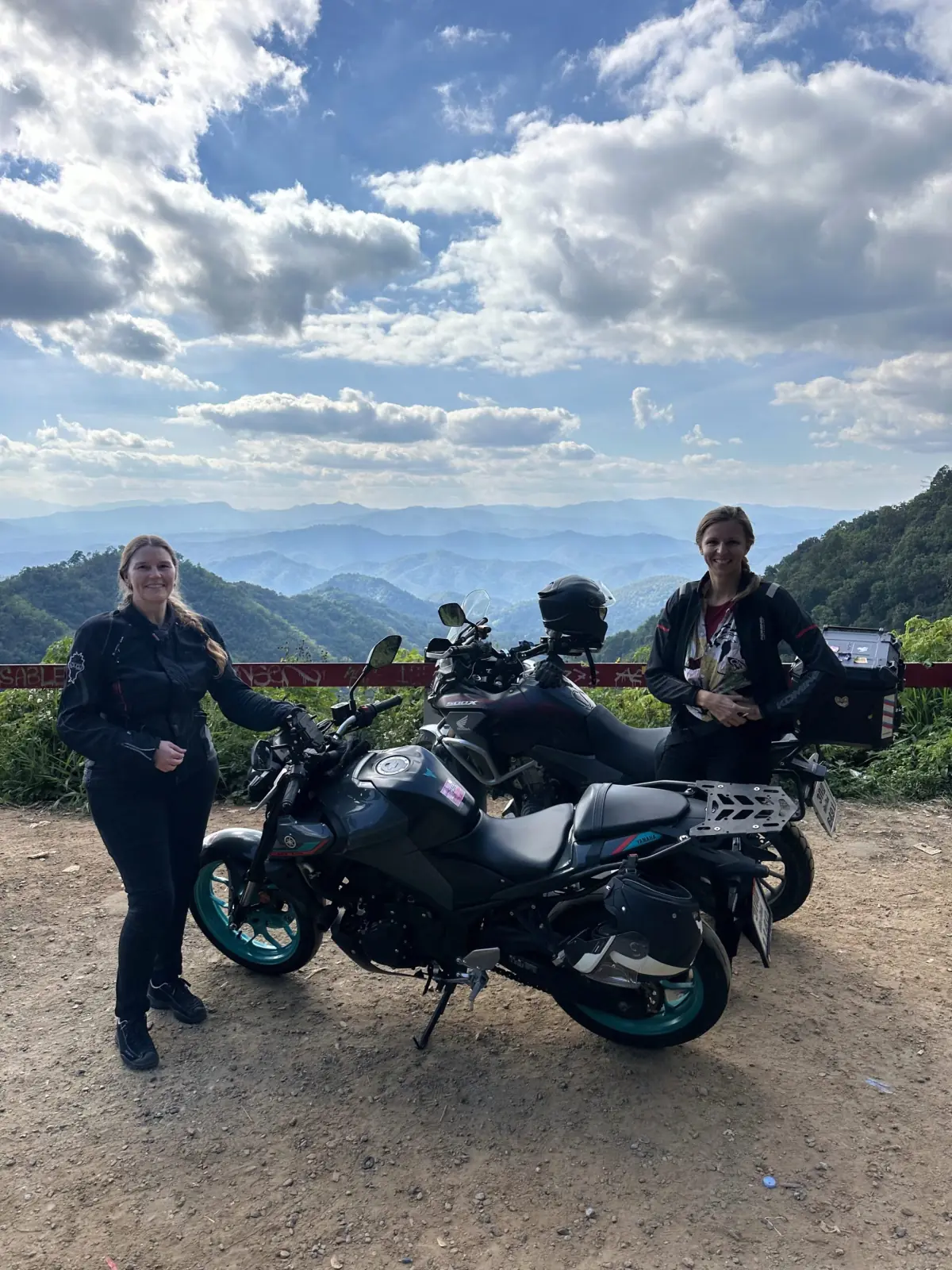
Ready to Ride, But Not Quite Sure Where to Start?
Everything above is the theory. If you want to go deeper — full packing lists, step-by-step route planning, what to do when things go wrong on the road, and a complete breakdown of Northern Thailand's best riding areas — all of it lives in my ebook →
→ Riding Thailand: A Motorcycle Guide for Women
The first time you navigate a Chiang Mai intersection at rush hour, you'll wish someone was riding alongside you. The first time you descend a mountain pass with a dog sleeping across the lane and a pickup truck appearing from a side road, you'll be glad you've ridden it with someone who has done it hundreds of times before.
That's exactly why I offer a Ride Ready Day — a one-day guided ride in and around Chiang Mai, designed for women who are competent riders at home but want to get grounded in Thai traffic before heading out solo.
In one day, we cover:
- City traffic flow and how to read it
- Mountain road technique on Thai asphalt
- The real rhythm of riding here — not the tourist version
It's the lowest-barrier way to know whether you're ready for a longer trip. Most women who do a day with me go on to book a multi-day loop. Some come back the following season for a full 7-day expedition through the mountains.
You don't have to figure this out alone.